Showing posts with label animals. Show all posts

Tuesday, November 13, 2018

Stop Being Terrible at Werewolves: A Friendly Guide for Fantasy Writers


The modern concept of werewolves originated some time after we stopped being hunter-gatherers -  who weren't afraid[1] of wolves, and in fact made friends of them and turned them into dogs - and sometime before the Renaissance. Wolves were the last widespread, man-eating large predator in Eurasia. They could leap out of the dark woods to attack livestock and eat children and unarmed peasants. The perfect animal to hang our collective monster fears on.

This wolf, the "werewolf-wolf", is not based on real Canis lupus; it's simply a stand-in for all things savage and animalistic. Fantasy need not be "realistic", but a problem arises when writers create a werewolf that isn't a generic savage beast, but a detailed, fleshed-out species with its own society based on the way wolves actually operate in the wild. And it's almost always done poorly. I don't care if your lycanthropy is based on magic, Magik, viruses, or aliens;  If you want to base your fantasy creature on real-world animals, you need to base it on real, up-to-date science about those animals.

I recently had to quit an urban fantasy series[2] I liked because I just couldn't stand the werewolves any longer. The rest of the world-building was great, but bad science will get to me every time. Here's an excerpt from the first chapter of the first book in the series:

"'...eat, then come back out when you're ready.' ... He heard the command and stiffened, raising his eyes to meet mine. ... I knew better than to give orders to a werewolf - it's that whole dominance reflex thing. Werewolf instincts are inconvenient - that's why they don't tend to live long. Those same instincts are the reason their wild brothers lost to civilization, while the coyotes were thriving[3], even in urban areas."

Keep in mind, the werewolf character in that excerpt is young, injured, and came to this person for help. And yet even in such a state he still "instinctively" hates receiving even the mildest form of an "order", to the point that the person trying to help worries that he'll attack her because of the way she phrased a single sentence.

This lays the ground work for werewolf social interaction for the rest of the multi-book, best-selling series. Werewolves are obsessed with hierarchy and dominance. To the point of stupidity - they often get distracted in the middle of things they're doing, including fighting an enemy, to turn on each other and fight their own comrades and family. All of them (except for some very rare individuals) are constantly, every moment, every single interaction, battling to become the "Alpha" and control the rest of the group.

I read a fair amount of contemporary urban fantasy, and this is a very typical example of how werewolves are portrayed. And it stems from an outdated and over-rated idea of wolf psychology, which can be summed up in one word:

The "Alpha"

Please, for the love of doG, stop with the "alpha wolf", "pack leader", "dominance is everything" crap. That's not how real wolves (or dogs, for that matter) work. We (western science anyway) used to think that's how canines worked. But we've learned a lot in the last 40 years. In fact, one of the originators of the term "alpha wolf", who is still a wildlife researcher, has since strongly rejected it, going so far as to beg publishers to stop reprinting his older work.

I get why fantasy authors continue to use this outdated theory of dominance as a framework for werewolf world-building. It's simple, most laypeople are familiar with the concept, and it's satisfying to the chimpanzee inside our brains. But it's boring, it's unscientific, and it's a sign of lazy researching.

How To Be Better at Writing Canine-Based Fantasy Creatures 

Wolf packs are families. There is a father and a mother, who mate for life, and their children. There may also be aunts, uncles, grandparents, and cousins in the same pack. There is no all-powerful king. The mom and dad may not even have many leadership roles. They often do, simply because they're also the oldest and most experienced in the family, but it's by no means a given. It may be other family members who decide when and where to hunt, or where to get water, or when and where to explore/check territorial marks, how harshly to discipline trespassers, etc.

The main thing the "alphas" are concerned with is that they are the only ones allowed to have babies (this isn't a strict rule either! More on that in a moment). This is for good, evolutionary reason: puppies survive better if the whole pack focuses on sustaining just one litter at a time, sharing the duties of babysitting, providing food, and teaching. Too many puppies at once, and all the puppies starve or die from accidents because there weren't enough adult eyes watching.

This "law" of no babies is loosely enforced by the mom and dad by discouraging the rest of the family from mating. The type of discouragement, and how rigidly it is enforced, will vary a lot from pack to pack and depend on how plentiful resources are. There's no need to "fight" their parents for leadership - if a son or daughter wants to have babies, they just leave and start their own pack. Even if one of them did feel the need to fight their parent, what would be their prize? Wolves mate for life, and they choose each other. If a son kills his father, there is no crown or queen to inherit, he's just as likely to be driven off by the rest of the family as he is to "win" a kingdom.

If a daughter does get pregnant while still living with her natal pack, it is usually by a rogue male (scientifically known as a "Casanova male", which is fantastic) who's been creepin' around the edges of the family's territory. Under normal circumstances, these puppies would be ignored by the rest of the pack, and die of neglect. It's possible they may be outright murdered by their own grandparents and/or the daughter may be shunned or kicked out of the pack. When resources are plentiful, however, sometimes the parents allow their daughters to have puppies, too, and the whole pack raises all of them at once.

Another "law" that is often bent and broken: territory. Wolves are often very territorial, and spend a good amount of time patrolling and marking the family's property line. Trespassing wolves may be killed on sight, but not always. Sometimes, new wolves are welcomed into the pack. Sometimes, they're allowed to visit and even mate with some of the females, but aren't really welcome to hang out very long. Sometimes, families join together into "super packs" for awhile, then go their separate ways after awhile. Some children are kicked out of the pack when they're mature; some choose to leave on their own; some choose to stay with their parents for many years; some may leave for awhile and then come back.

Like human families, each pack is different. Some will be more egalitarian, while others will indeed have authoritarian parents that are every bit the stereotypical "alpha". But they are also dynamic. If a father or mother is too much of an a-hole, members may simply leave, which would be detrimental to the "alphas" because then they have less help raising their puppies, deincentivizing extremely aggressive kin behavior. If a younger member of a family fights or kills their parent (which does happen sometimes), it's a lot less less about "fighting to be dominant" and a lot more, "jeeze, dad was such an abusive dick, it's so much better since he moved out".

Wolves can indeed be brutal, but it's not a given. Wolves are flexible, adaptable, social, and intelligent. It makes no sense for werewolves to be mindless, rigidly adhering to hierarchy, and wasting energy fighting each other. The real lives of werewolves could be just as complex, dynamic, rich, brutal, bloody, as real wolves. Let's not limit ourselves.

Some examples of good werewolf world-building

Shout out to Hemlock Grove for creative and well thought-out werewolves that have an animalistic nature and all that fun duality symbolism without the weird baggage of dominance theory.

Shout out to DiscWorld for a well-formed and complex werewolf society that does not involve any "alpha dog" nonsense (that I've seen; I haven't read all the DiscWorld books). Although werewolves are quite harshly hierarchical, in typical Pratchett fashion, it's allegory about human monarchy/authoritarianism rather than anything to do with real wolf "pack dynamics". Bonus love to Pratchett for pointing out many times that wolves and dogs are not very different at all.

Shout out to Harry Potter, in which lycanthropy is treated mostly as a disfiguring disease. There isn't so much a society of werewolves, as there is a loose association of people who come together because they're infected by the same disease, and therefore face the same discrimination from the rest of the world. Werewolves who are bad, violent, or authoritarian, would be so whether or not they were infected with lycanthropy, not because of anything to do with wolf psychology. J.K. Rowling goes out of the way to point out in the text that werewolves don't act much at all like real wolves.


~~~*~~~


Footnotes
[1] The old paradigm of early dog domestication (where cave men hated wolves and wolves were scared of cave men) is falling out of favor. The newer theory, is that wolves and early humans were hunting partners to one extent or another as far back as the Neanderthals or earlier. For more info, read the wonderful book How the Dog Became the Dog, by Mark Derr (or google his essays), and the many essays on the subject by Scottie Westfall. This is also something I explore in my "Domestication Stories" series of short stories.
[2] Which I won't name. You can probably figure it out
[3] A side note of irritation for this quote specifically: new research suggests coyotes are much closer genetically to wolves than originally thought, and may actually be a subspecies of wolf, or that wolves and coyotes make up a species complex. This makes sense, because they are identical in almost every way to wolves. The only reason they're currently thriving, and wolves aren't, is that they are smaller. They can live off smaller prey and lower quality foods like fruit and garbage that simply won't sustain the mass of a wolf, a diet that means they slip under the radar easier than an animal that requires large prey. It means that  a century ago, when the government was giving out bounties on a whole list of "unwanted" animals, coyotes weren't as heavily persecuted as wolves were. Coyotes only managed to expand their range after humans systematically killed off most of the wolves in North America. Not because they're smarter or have somehow less "volatile instincts" than wolves.

Tuesday, October 30, 2018

Domestication Stories: Talking to Animals


(Content Warning: graphic description of hunting and butchering)

When the faint howl rose from over the ridge, SmallWatcher and the rest of the nearby Family leapt to their feet. They'd been wandering together along the bottom of a ravine not far from the den,  alternating between lounging and halfheartedly digging for mice. The last big kill had been days ago, and they hadn't scented any Prey of decent size since then. They were all starting to get hungry, and the the howls were a very welcome sound. It was GreenPaw's voice. He'd found Prey.

SmallWatcher whined in delight and danced around Aunt, begging her to start the run. The oldest in the Family, and the best hunter, everyone watched to see what she would do, even Father. Aunt lifted her nose to the wind. There was no fresh scent there yet, but she must have decided to trust GreenPaw, for she started off at a trot toward the sound of his voice. SmallWatcher stayed right on Aunt's heels, just far enough back to avoid annoying her. The rest of the Family spread out on either side (except for those who remained with Mother back at the den).

As they crested the ridge, Aunt suddenly let out an excited wuff and broke into a gallop, turning downhill. A moment later, SmallWatcher caught the scent as well: an aurochs, not far away, running alone, its sweat and fear a delicious beacon billowing up from the forest below. The chase commenced. Every muscle stretched and trembling, the scent of prey hot in her nostrils, breath burning in her throat, the feeling her Family around her, joined in the same joyous motion, hunger pangs forgotten.

Soon, she could hear it - like an entire herd of deer crashing through the brush. Finally, she caught a glimpse of the prey with her eyes. A flash of black through branches. Her stride faltered for a step. This was no calf or cow, but a full grown male, with two enormous horns. Just like the one that had killed an older Sibling this past winter. SmallWatcher and her litter siblings had been younger then, they mostly observed during that hunt. Aunt had cleverly chased the bull into a swamp, but even exhausted and mired down, it had still managed to hook its horns through VoleChaser's body. The Family stilled mourned him.

SmallWatcher's heart clenched, fear replacing excitement. It wasn't winter any longer, they weren't that desperate, were they? Surely there were easier prey to hunt today. But Aunt did not slow. She was running along side the prey, trying to pass it, get in front. SmallWatcher's heart gave another surge of fear, but she quickened her pace to catch up.

They broke out of the forest into the wide river valley filled with grass and low shrubs. Here it easier to see and smell, but also easier for the prey to outrun them. But the prey didn't run faster. In fact, it was slowing down. It dawned on SmallWatcher that it was far more exhausted than it should have been. It must have been running for far, far longer than the Family had been chasing him. Sweat had dried in salty streaks along its flanks, and blood dribbled from its nose and from a mysterious wound on its hind leg.

The whole family was running parallel to the prey now, keeping pace with ease. Aunt began to slow and veer toward it, staying just outside the range of the terrible weapons on its head. Greenpaw and Father were on the other side, mirroring Aunt's action, staying alongside without attacking. It swung its massive head back and forth, unsure if it should attack any of them. As it slowed further, Aunt took the opportunity to cross in front of it. It made a perfunctory swipe at her with the horns, but she was well out of range. The motion tired it even more (as Aunt knew it would) and it slowed to a limping walk.

The rest of the family followed Aunt's lead and started to circle the prey, taking turns to make feinting attacks. The prey snorted and swung his horns again and again, but the action did nothing but tire it more. Aunt and Father still weren't attacking yet, even though they had the prey trapped. SmallWatcher tucked up her tail with anxiety. Eventually, if they wanted to eat, they would have to attack for real, and someone would probably get hurt.

But before she could worry further, she suddenly caught another scent on the air. She froze in her tracks and jerked her head up. Father noticed, scented the air, and then trotted over to her. He rubbed against her shoulder reassuringly. Wait, watch. He trotted back to continue to circle the prey.

Smallwatcher walked away from the Family to stand on a rock. She had the best view when the Travelers arrived. They trotted out of the forest, from the same direction the chase had come from, slow but confident. It was her first time live-scenting a Traveler. Last autumn, when she was just old enough to start roaming the Family's territory, Aunt had showed her their empty camps near the river. Their live-scent was just as smokey as their cold camps, as if they carried fire with them under their skin, although they didn't look very imposing.  They were tall and gangling, not much bigger than a Family member. They had no horns or antlers or sharp hooves or large teeth, but they approached the prey without fear or hesitation.

The circle of the Family became a half circle, as they made way for the Travelers. Aunt, Father, and GreenPaw were wary, but not afraid or surprised by their arrival. Only SmallWatcher's litter siblings, who'd only been hunting for two seasons, were uncertain.

The prey lifted its head and swung around, eyes rolling,. This is what the it had been running from. It was more scared of them than it was of the Family. The Travelers stopped outside the range of his horns, and started a slow dance, shifting their weight from foot to foot, long sticks raised in their front hands. One of them began to sidle around to one side. The bull tensed, eyeing both of them, as if to choose which one to charge. Just then, Aunt raced forward and attacked the prey's flanks, tearing at them. I tensed. Was it time? Would the rest of the Family rush in? But no other family member joined her.

The prey bellowed and swung back around, kicking out, but she'd already let go and retreated. It was not a real attack, but a distraction. The two Travelers immediately took the opening as if they'd been waiting for it, leaping forward to stab their sharp sticks into the Prey's ribs and soft belly. They stuck there, deeply entrenched in flesh as the Travelers jumped back. The prey screamed and kicked, now at its most dangerous and unpredictable. Pain would bring renewed strength and bravery; It could attack any of them, now.

Each of the Travelers pulled another spear from their behind their backs, and the dance repeated itself, with one of them trying to hold its attention while the other circled around. Once again, the bull started to charge, and once again, Aunt bravely rushed into to attack its rear. This time, one spear went into the ribs behind the elbow, the other into the neck. The prey went down on its side, kicking and thrashing, its horns digging a deep furrow into the moss and dirt.

SmallWatcher twitched and whined in excitement. The prey was down! Now was the time the Family should rush in. But Aunt and Father had retreated again, and went back to just watching. The Travelers waited, too. They backed away and squatted on their heels, patient and unhurried.

Finally, after what felt like days, the prey lay completely still. One of the Travelers rose to his feet and circled around behind its head to pull out the spear from the neck. The food did not react, nor did it move when he gave one last thrust to the spine to make sure it was dispatched.

SmallWatcher marveled that the hunt was already over. The entire hunt had taken less than half a day. Some hunts of large animals took the Family days to complete. No one injured. And before them lay enough food to feed the family for two weeks. But would they get to eat any of it?

Saliva dripped from SmallWater's mouth. The scent of sweet blood and dark, rich offal filled the air.  but still, none of the family came forward to eat. Aunt and the rest of the family still paced in a rough half-circle, but slow now, at a further distance, eyeing the Travelers, and the Travelers eyed them back. But unlike if the situation had involved a lion or hyena, or a rival Family, Aunt and Father did not make any aggressive moves to claim the kill for their own. Everyone remained calm and watchful.

While the one kept watch, the other Traveler pulled a small stone from the animal skin around its middle and used it to cut into the skin on the auroch's hind leg. Two mighty blows from another, larger rock, and the lower leg was severed below the hock. He repeated the action for the other hind leg, and paused in his work long enough to suck some marrow from the end of the crushed leg bone. He tossed the second leg to his companion, who did the same. When he was finished, the dropped the leg to the ground. That's when Father made his move.

He rushed in and snatched up the leg. Both Travelers yelled, and the guard swung with his spear, but Father was already out of range. He took his prize deep in the grass to gnaw on, and in the moment of distraction Father, Aunt snatched up the other discarded leg and ran in the opposite direction. I listened with mouth-watering envy as she settled in the bushes to chew on it. My litter Sibling, FastPaws, whined and started to dart forward as well, but Aunt left her treasure long enough to block him, growling and snapping at him. Not yet. They are dangerous. Wait.

The Travelers ignored the Family as long as they stayed back, and continued to cut into the kill, slicing away at skin and tendon and muscle, until the entire hind quarter was separated from the rest of the body. The Traveler dragged the quarter off to the side by the flap of extra skin. By the time the sun began to set, the other hind quarter joined the first, and then a shoulder quarter, then more Travelers arrived.

 These ones carried more things. More sticks of all sizes; more animal skins wrapped around objects; more rock tools; more exotic scents. They dropped their things and milled around the food for awhile, chattering and waving their front limbs. Then they all sorted themselves and got to work. Some stood guard as others helped butcher, and others fiddled with their belongs, arranging sticks and animal hides in some pattern that SmallWatcher couldn't understand. SmallWatcher stared in wonder as one of them knelt and produced fire from the ground. This caused some excitement from her siblings, but when Aunt and Father continued to stay calm, they soon settled down.

None of them ate, until at one point, one of them emerged from the bloody center of the food with the liver.  SmallWatcher's favorite, though she rarely got a taste since Aunt, Mother, Father or older siblings usually got to it first. Everyone stopped work and passed chunks of liver around, each cutting off pieces small enough to put into their tiny mouths.

SmallWatcher couldn't stand it any longer. The scent of warm liver and blood were so close, even the alarming smell and crackle of the fire couldn't keep her away. She slunk down off the rock and inched toward the food. One of the Travelers shouted and pointed at her, and a couple guards came toward her, sticks raised. They were so close to her, they could have stabbed her with their spears with one lunge. They smelled exotic, dangerous; they carried on their bodies the relics of so many successful hunts - skins and tendons and bones and teeth and claws from all different animals, even teeth from a lion. She heard Father's distant growl and whine, but he wasn't coming close. SmallWatcher shivered with nerves, but didn't retreat. They hadn't attacked yet. And if there was even a chance...

Without thinking, she lay down on her belly, flattened her ears, and licked her lips beseechingly, chin almost touching the ground. She'd never seen anyone try to talk to other animals before. It felt odd, like play-bowing to a rock. But, SmallWatcher was the smallest in the Family, not counting the new pups; the last-born of a large litter, last to the teat as a pup, and last to the kill now that she was old enough to hunt. Begging was second nature to her.

It worked. They lowered their spears and looked at each other and chattered with their strange voices. And then, one of them flicked a small piece of liver at her feet. She gulped it down at once, possibly the best thing she'd ever eaten. Her actions elicited more chatter from them, and then another Traveler tossed a pair of vertebrate at her, still stuck together and covered in scraps of meat. She snatched it and ran back to her rock to chew on it. Her instincts told her to run much further away, but she sensed that her siblings wouldn't dare come and try to steal it if she stayed closer to the Travelers and their fire.

She was right: her Siblings never tried to steal her bones. She ate at her leisure, nibbling every last scrap of meat, and watched the Travelers work. When they finished their work, and had a mound of their butchered meat covered in a hide tarp, they - all except a guard - lay down near the fire to sleep.

Only then did Aunt and Father allow the rest of the Family to approach the food. Aunt's demeanor said, it's ok to eat now, as long as you stay away from them. And she seemed to be right - the guard watched them, but made no moves against them as they dragged away portions of food. Father, the strongest, grabbed the head. The Travelers had cut off the horns and scooped out the brain, but left all the face meat for the Family. There was also offal, all four lower legs, the pelvis and tail, big pieces of neck, some skin, many bones still coated in meat. There was plenty for everyone.

The Family stayed near the carcass most of the night, taking turns to drag bits away into the grass, gulping down the soft bits as fast as possible and gnawing on the bones. Aunt and Father were the first to leave, after they'd filled their bellies. They would go back and share the feast with Mother at the den.

The Siblings stayed until almost dawn, squabbling over bones and nibbling every scrap of meat they could, some of them carrying bones with them as they left. SmallWatcher was the last to leave. She nibbled on a rib and watched as the Travelers got up with the sun, buried their fire, and each took up a load of the meat to carry. They walked away, toward the river, probably to the camp that SmallWatcher had seen last year.

SmalWatcher stayed near the auroch's scattered bones until the last Traveler disappeared from view. They were returning to their den, just as SmallWatcher's Family returned to theirs. But they'd meet again, soon, out on the hunting fields.


~~~*~~~


SmallWatcher's story is set in Europe 200,000 years ago and the people she encounters are Neanderthals. Her clan wouldn't meet Homo sapiens, the humans who would eventually mold them into the dog we know today, for at least another 100,000 years, but it's very likely Neanderthals and other archaic humans started wolves on the path to domestication, simply by virtue of having the same habitat, prey sources, and sharing the wolfish traits of being opportunistic, adaptable, and curious.

Imagine how many of these encounters like what I write here must have happened over the millennia, and you can see how ancient humans could have naturally shaped wolf populations to be some degree of people-friendly, long before their "true" domestication by H. sapiens 35,000 years ago.

My series of 'domestication stories' are speculative, but are based on the most recent data we have on early people and wolvesScience used to believe that to domesticate the dog there had to be intent. It's hard to imagine selective breeding without an end goal in mind, but the more we learn, the more we understand that that's exactly how the dog (probably) came about. As canine historian Scottie Westfall puts it: "it had to be so easy, a caveman could do it". 

Saturday, September 12, 2015

Sketch from yesterday

The scene would have been impossible to photograph, but I thought it worth a minute's-worth of sketching to remember: two coyotes by the side of the road, one recently killed, one standing at a distance, panting and looking around, seeming to be at a loss.


The outskirts of Pendleton, Oregon

Thursday, August 28, 2014

Shore Birds

IMG_8218a
8/26/2014

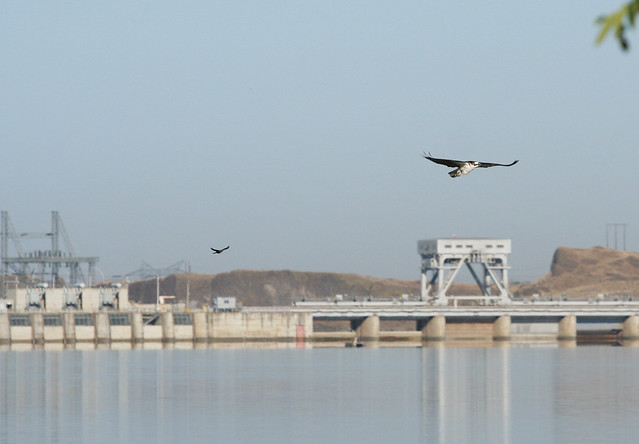
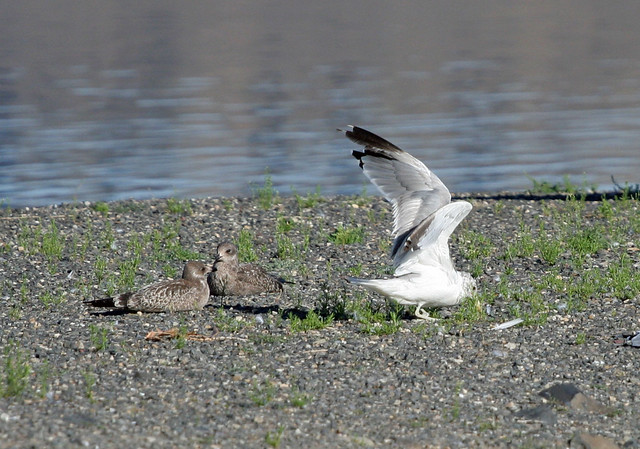
Little visit to a beach just up river from the McNary dam. A great place to see dinosaurs.

Today we got to see a seagull with only one foot.

IMG_8210a


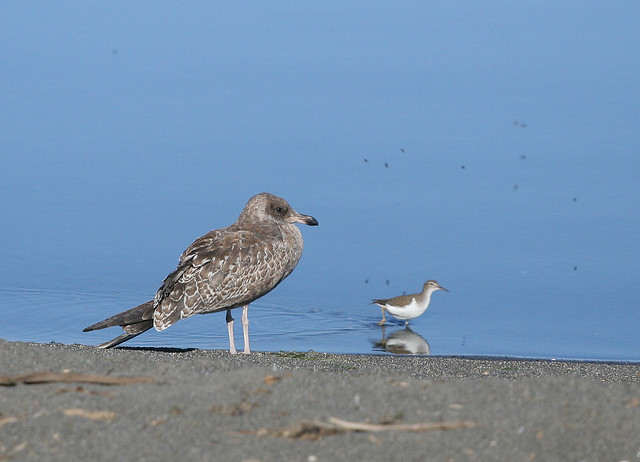
A ... sandpiper... thingy? tiptoeing by a larger cousin. Help with identification would be nice. It looks like a solitary sandpiper, Tringa solitaria but they aren't supposed to be here.

IMG_8238a


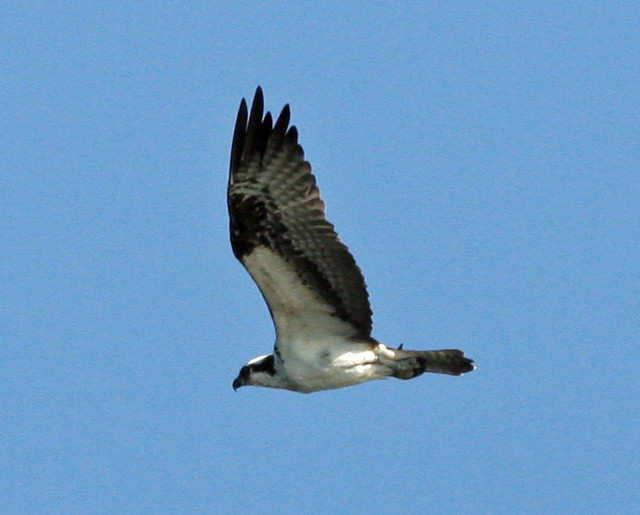
An osprey who had been fishing, but of course stopped once I got my camera out of the car.

IMG_8232a


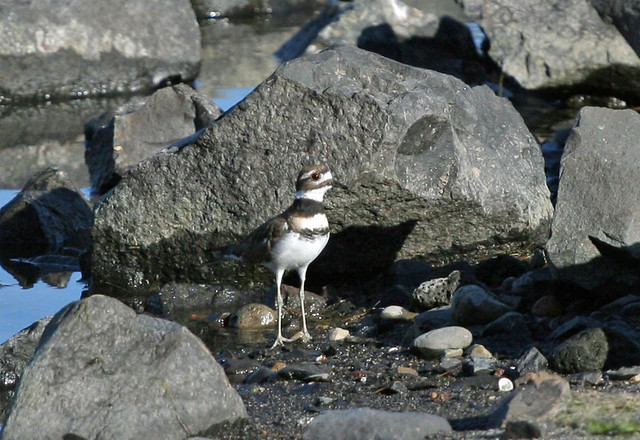
Another killdeer doing that bugeye thing they do so well.


IMG_8255a


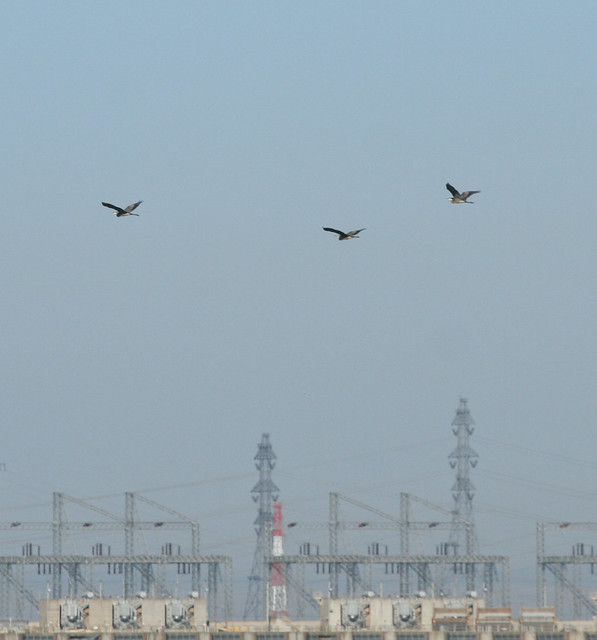
Some great blues being all graceful and majestic.


IMG_8235a

Moenkop Dinosaur Tracks

IMG_8172a

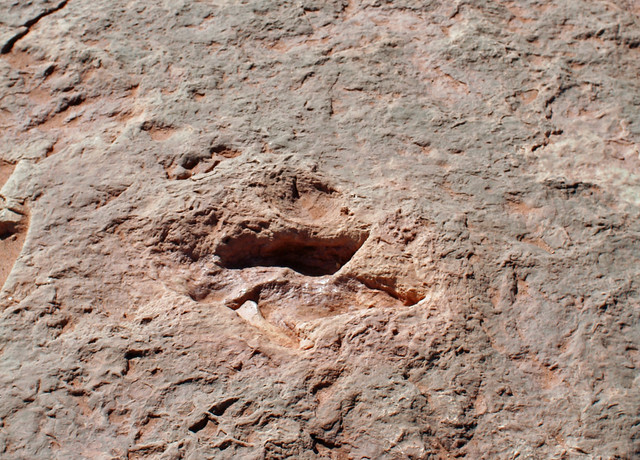
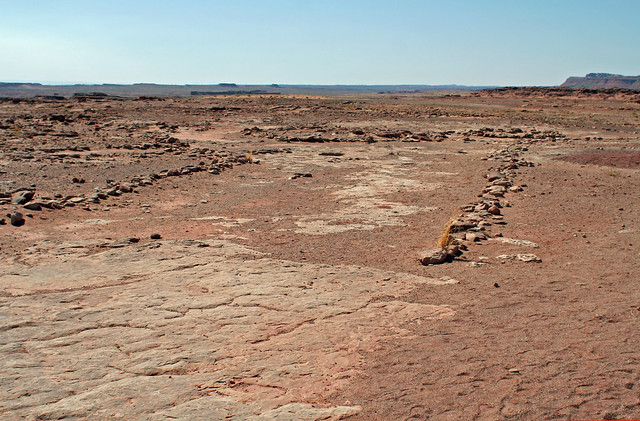
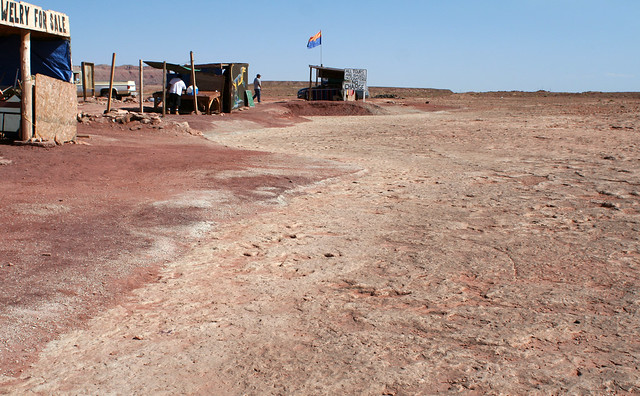
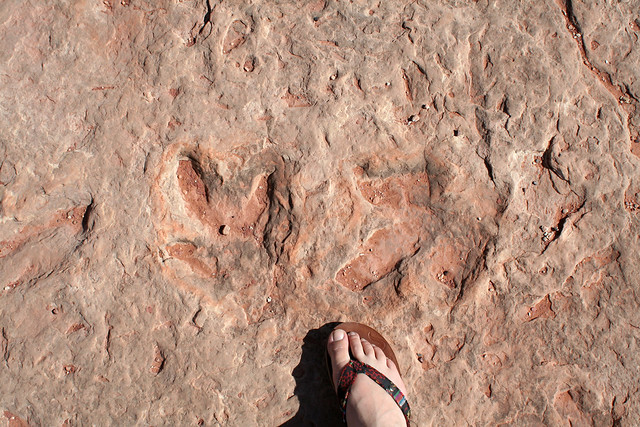
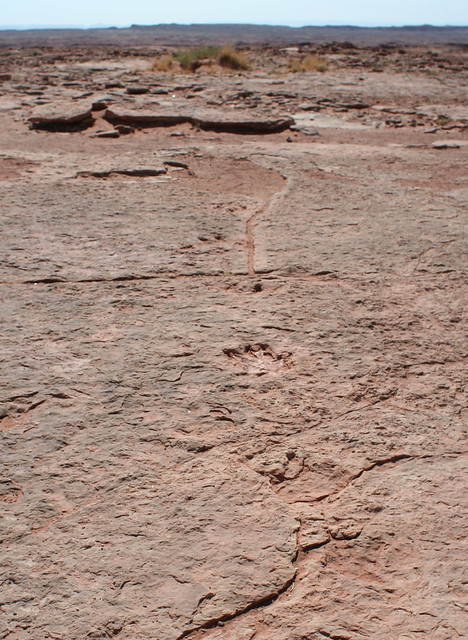
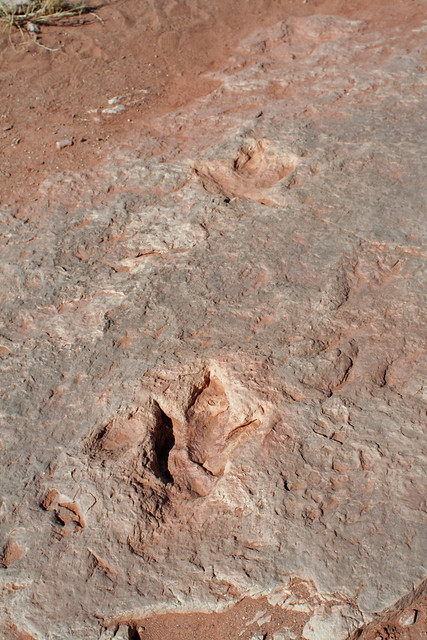
Turns that just outside of Tuba City, Arizona is a huge field of early Jurassic dinosaur tracks. Who knew.

There is a hand-painted sign by the side of the road and a gravel parking lot with a few venders selling Navaho crafts. Some of the locals offer to give guided tours, but I turned them down in favor of just wandering, carefully, along the edges of the tracks (there are no fences or signs, just piles and lines of rocks the locals have made to outline certain areas. I watched three kids run around right on top of some of the tracks and cringed a bit).

There is very little information online about this insanely cool place. There's some about the legends from the people who've lived next to them for thousands of years. There is one published paper by Wells from 1971 (couldn't find online). According to an article from 2012, the Navajo Nation plans to develop a tourist center at the site, but for now there hasn't been much development or scientific study of the site, which sort of boggles the mind. This brief note on the Experience Hopi website is about the only reliable info you'll currently find online. Wikipedia doesn't even have a stub article on the site. That's how bad it is (and probably why creationists, who love both made up shit and information vacuums, have latched onto the site and claim there are human footprints alongside the dinosaurs, thus disproving evolution.)


IMG_8177a


IMG_8185a


IMG_8186a


IMG_8174a


IMG_8171a


Sunday, December 9, 2012

Vaccine wankery from well-meaning people

In case my comment gets removed (and so no one need suffer by missing a piece of wisdom from yours truly). Last week I spent a bit of my time on a comment in response to this blog post .

Here it is. Enjoy:

I don't disagree that an indoor-only pet may not need a rabies vaccine - rabies isn't like panleuk or upper respiratory infections that can be tracked in on your shoes, for example. But the risks from vaccines in general are very small. Why such the freak out? The links you provided just go to highly biased and non-scientific "opinion" websites. Not very convincing.

And there are not "countless" studies that say that vaccines are "damaging". That's false, or at least dishonest. There *are* well-documented and well-known risks from vaccinating, but serious reactions or development of soft-tissue sarcomas are very, very rare; Statistics we have aren't great, but indicate less than 1 in 100,000 risk. You put your cat in more risk by driving him to the clinic in a motor vehicle.

It's unfair to say that the woman's response meant she "didn't care about the health of animals" and it was "just to make money".

It's standard to vaccinate dogs and cats for rabies between ages 3-4 months based on the recommendations of multiple scientific organizations using current health data. And it's very reasonable for a humane society clinic to insist on vaccinating upon intake for spay/neuter surgery - from their perspective, they're dealing with a lot of animals who may never see a vet again in their life. It's in their best interest, and the best interest of the community as a whole,  to help maintain good herd immunity in the community they're serving.

Here are some less-biased links:

http://www.vet.cornell.edu/FHC/resources/brochure/vaccbr.html

https://www.avma.org/About/AlliedOrganizations/Pages/ownbroch.aspx

http://www.vmd.defra.gov.uk/pdf/ati/Catvaccinesinjsitesarcomas.pdf

Thursday, August 12, 2010

Ixchel gets a bath

Whenever she's getting ready to shed, I put Ixchel in a tub to soak. She gives every indication of hating being forced to sit in luke warm water for 30 minutes, even though she will occasionally soak in her water dish of her volition.


IMG_0109a


IMG_0099a


IMG_0101a


IMG_0103a


I'm mean to my pets.

Wednesday, April 14, 2010

Now, about that breed bias...

While we were driving around EVERY FREAKING residential area in 100 square miles on a warm spring day looking for a rental, we saw a lot of dogs. I started keeping a tally of breeds I recognized.

Pit bulls (AST/APBT) - 13
Chihuahua - 10
Labrador - 9
Min Pin - 6
Pomeranian - 5
Border Collie - 6
Golden retriever - 4
Rottweiler - 4
GSD - 3
Corgi - 4
Wheaton Terrier - 4 (all in one yard)
Scottish terrier - 5 (all in one yard)
Jack Russel - 2
Boston terrier - 5
Mini poodle - 1
Dachshund - 3
Boxer - 4
Basset hound - 2
Bluetick hound - 3 (all together in the back of a truck)
Great Dane - 1
Husky - 1
Cattle dog - 2
Standard Poodle - 2
Mixed/unidentifiable by this non-expert - 18

I'm not sure what I'm trying to prove here. I just offer this as further proof that pit bulls are popular pets.

On another, related anecdote, I also saw only one dog chained up (a cattle dog). There were only two dogs roaming at large (a mixed breed and a husky were running full speed around a neighborhood having a grand ol' time, pausing now and then to wrestle each other). The rest were either behind a fence, or lounging off leash near their people.

Sunday, April 4, 2010

Ixchel

I realized one of my pets has been neglected on this blog. I never want to be accused of being exothermicist, so here I formally present to you Ixchel.

IMG_8901a


She's a natural colored, many generations captive-bred Honduran milk snake. She and a brother from the same clutch were 'surplus' from the breeder (ie, didn't carry both recessive genes he was going for; he's also a reptile rescuer, so don't think too badly of him). She was free to whoever wanted her. Because of the geographic area her ancestors lived, I named her after a Mayan goddess (pronounced EE-shell).


IMG_8906a

IMG_8911a

Here she is when I brought her home, only a few months old:
Ix Chel

Today she's about 4'4" long and barely fits in the lightbox:

IMG_8886a


... and is a rather uncooperative subject to photograph, anyway.

IMG_8888a

IMG_8889a


Hondurans (Lampropeltis triangulum hondurensis) are the largest of the milk snakes, reaching lengths of up to 6 feet and living 20 or more years. They're supposed to be a little on the aggressive side for their group. Indeed, Ixchel's brother bit me several times, once dangling from my arm like a rubber hose attached to a binder clip. Ixchel has never bitten though, even when I've been dumb enough to reach into her cage with my hands smelling of rodent. She's a very mellow snake and I'm glad to have her in my life.

Wednesday, March 10, 2010

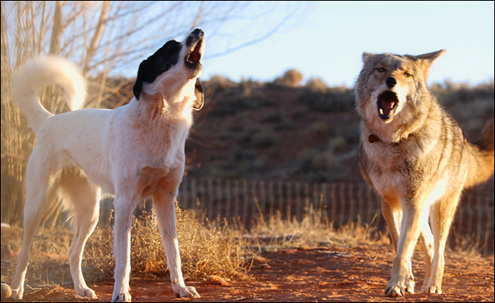
dog and coyote howling together

Photo by Shreve Stockton

I don't know how many people read The Daily Coyote , but it seems to get a sizable audience.

I'm very skeptical of anyone keeping a wild or hybrid as a pet, but the author of this blog is an example of how it can be done right. I've read her book. Her success (and it wasn't an easy success, either) is probably only because of her unique situation.

The images of Charlie interacting with his dog and cat companions fascinate me. Whatever my mixed feelings of keeping a coyote as a pet, I can't get enough of these photos .

Saturday, January 30, 2010

Thursday, January 14, 2010

Speaking of invasive species

In Florida, iguanas and non-native snakes are raining from the sky.

"A lot of these invasive exotics come from southern climates, and they won’t be able to withstand a cold spell for this long,” said Linda Friar, a spokeswoman for Everglades National Park. “And as they die off, the native species, the alligators and birds, are happily consuming them."
It would be neat if mother nature took care of a few invasives, but I think it's more likely that this will leave the most hardy ones to reproduce.

I can't help being a little sad about the iguanas. I've worked with them before and I'm a huge fan. I wouldn't mind having one as a pet some day. They're a bit like scaly cats; intelligent, aloof, but they can show affection and they seem to like attention.

missing the straw hat

Monday, September 14, 2009

The Zebrapacalypse

It's coming. They already have show standards.

All it'll take is one ranch (probably in Texas) with a breeding program and we'll have a truly domesticated strain of zebra. It took 50 years to
domesticate foxes, but zebras may have a leg up because they've been bred in captivity for so long.


What happens after that?

THIS:

Domesticated Zebras
(Click to see larger version)

(That mini zebra may be the cutest thing I've drawn in my entire life.)

Thursday, July 23, 2009

Jerboas: the tastiest snack on the planet?


Their movement patterns look like a perfect cross between a bird and rodent.

I've noticed my cats (and border collie) don't get too excited by my pet rats. I'm guessing it's because most of the time the rats don't show the same quick, prey-like movements you see in wild rodents. They're pretty lazy and fearless and slow-moving most of the time, and I'll even allow (limited, supervised) visitation with the cats and dog outside the cage. That's how unmotivated my pet predators are by my pet prey creatures.

I'm pretty sure seeing a jerboa, however, would drive my cats absolutely bonkers (and my neighbor's rat terrier, for that matter).

Friday, June 5, 2009

Horse and bird friends

IMG_5028


I went to snap some photos of some horses that live next to a park I go to with Zelda. I noticed they had a friend today.


IMG_5039


IMG_5044

This little bird was sitting on the bay's withers, and you can see the little white spots of poo - he's been hanging out there for a while! He clung there like a cute little feathered barnacle even when the horse trotted 50 yards away.

IMG_5035


He only flew away when I got too close. I felt bad for a moment, and the bay is all, "where's my pal?"

IMG_5046


But not to worry. Mr. Bird just flew back to an alternate perch.

IMG_5047arrow