Showing posts with label out in nature. Show all posts

Thursday, February 7, 2019

Old Homesteads in Western Oregon

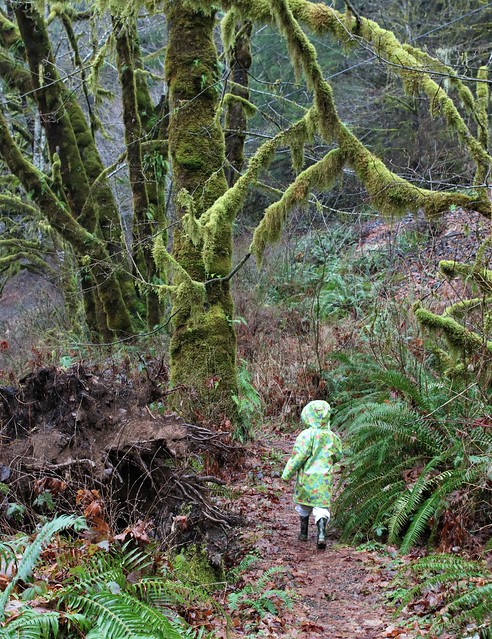
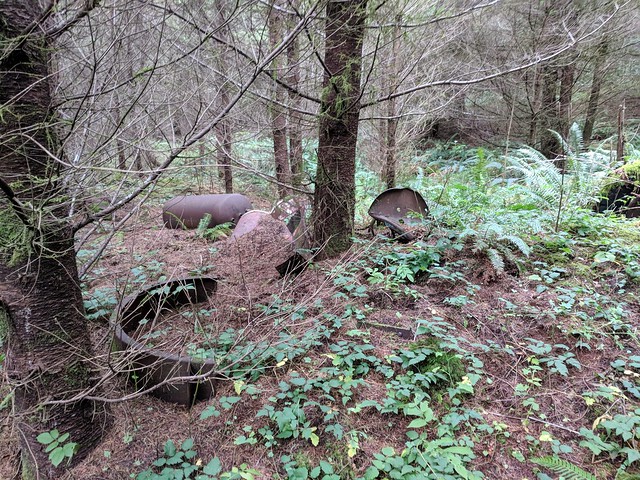
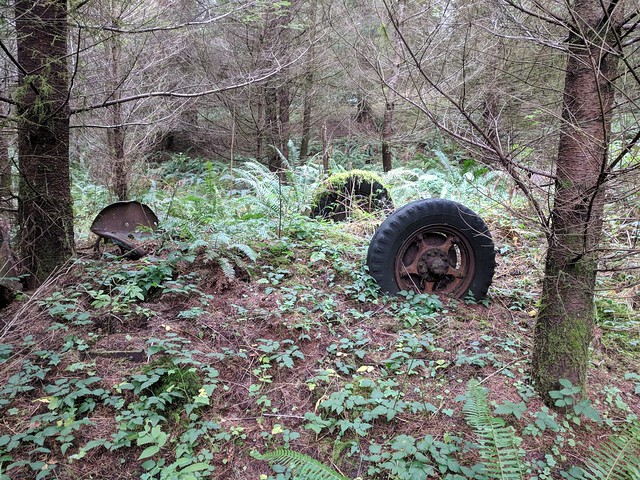
I grew up hiking and hunting in private timberlands in and around the coast range of Western Oregon. I've lost track of the number of homestead sites I've run across in the middle of the woods, in unlikely places. My dad worked for timber companies, and would show me different sites. Often the only way to mark them is the ancient apple or pear trees who remain, clinging to life as the forest grows up around them and shades them out. Or sometimes, an oddly-placed clump of domestic iris or lily that has no business in a wild Pacific forest.

Most of these sites I'm talking about sprung up in the last wave of land-grabber/white homesteaders in the late 1800's and early 1900's. Many of them lasted, at most, a couple decades before the occupants realized how hard it was to grow crops on a PNW hillside with thin, clay soil best suited for sword fern and douglas fir. Most of them were abandoned and the land absorbed by large timber companies who let the trees regenerate and the buildings quietly rot away. Or, like in the case of my childhood house, the majority of the homestead land is absorbed, while the house, outbuildings and useless-for-logging-purposes flat ground near the creek was sold as a residence.

In some cases, families clung to homestead lands for as long as they could, slowly selling land to the timber companies when they needed money. As the original houses rotted, they built new houses closer to the public roads and highways, often delegating the original home sites as garbage dumps (because even to this day in rural communities, it's much cheaper than a long trip to the landfill). 

So, if you're stomping around inside a tree farm and come across a spindly pear tree growing on a bench far from any road, or an old plow, or truck chassis, rusty artifacts like old water heaters or oil cans, someone once had a house there, and a few chickens, pigs, and maybe cows.
2018-11-24_09-59-46

2018-11-24_09-58-53

Wednesday, May 10, 2017

Friday, December 30, 2016

Unlikely Friends


IMG_9785a

IMG_9784a


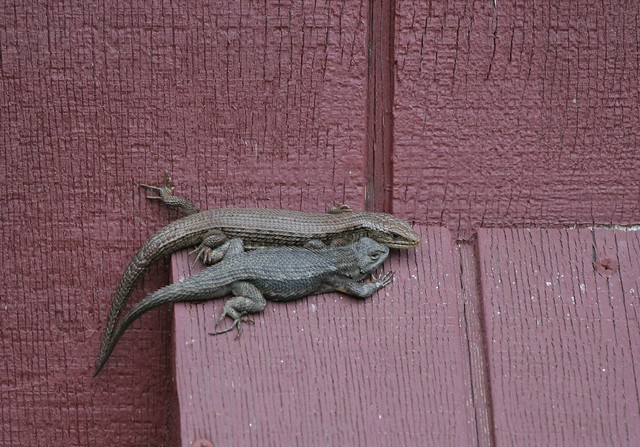
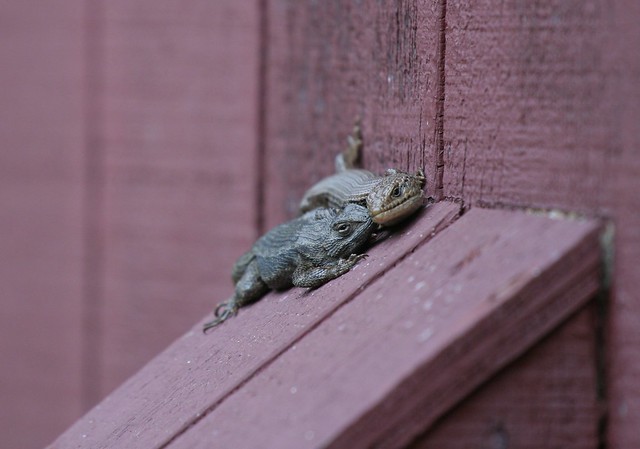
A western fence lizard (Sceloporus occidentalis) and a northern alligator lizard (Elagaria coerulea) sharing the weak sunlight of a cool spring day in Oregon (taken last April. Because I'm slow these days).

They look very similar, and occupy similar niches, but they're not too closely related. It's probably the equivalent of a pig and a deer cuddling up together.

Sunday, September 25, 2016

Salmonberry Jelly

IMG_20160616_082731


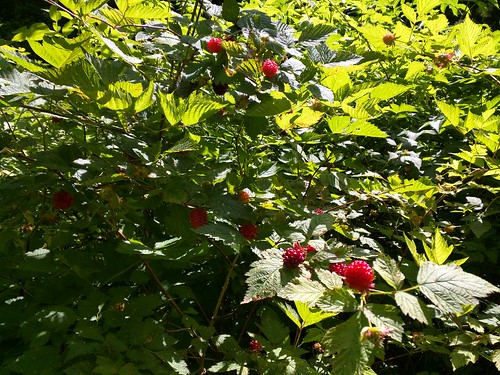
Salmonberry is native to the Pacific Northwest and is very important to native americans all up and down the coast, from what's now Alaska, to what's now Northern California. It hasn't been domesticated, so this is only available by knowing a good picking spot (and having permission to pick there).

I also feel obligated to balance the extreme fruit-bias in our culture by informing everyone that the entire plant is edible. The fresh spring sprouts can be eaten raw or steamed.

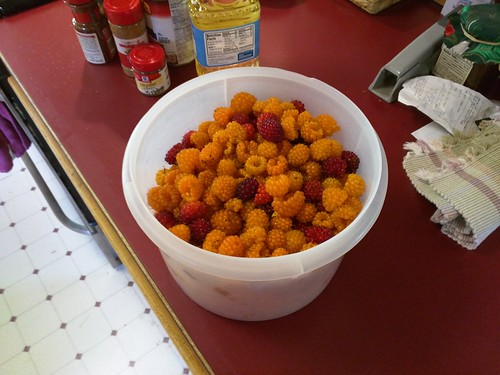
The berries can be tricky. It's hard to tell when they're ripe because they come in such a wide array of colors (pale orange to dark red).


Salmonberries Memorial weekend 2016
(All of these are the same level of ripeness, from bushes a few feet apart)


They have inconsistent (and most people say bland) flavor; birds and bears eat them before you can get them; and they tend to grow near stinging nettles and devils club.


Salmonberries Memorial weekend 2016

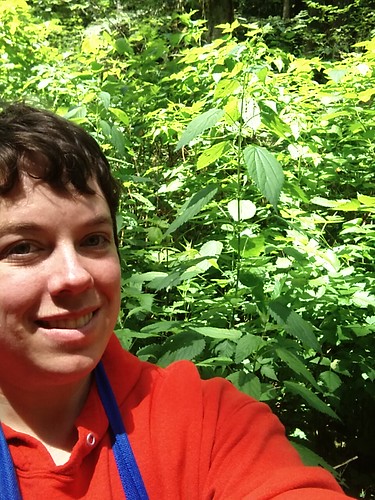
(me standing in front of a a nine-foot-tall nettle while picking)

But they're very juicy and I'm lucky to have a good spot on private land that no one else but the birds are using. My first trip to the patch was Memorial Day weekend. I got a decent amount, but the picking was better when I returned two weeks later.


Salmonberries Memorial weekend 2016


For making the jelly, I got tips from this awesome blog, but I did a couple things different. I definitely agree with her that I would never make salmonberry jam - the seeds are ridiculous. (She's also in a much harsher environment than me. Our Oregon salmonberries grow ten feet tall).
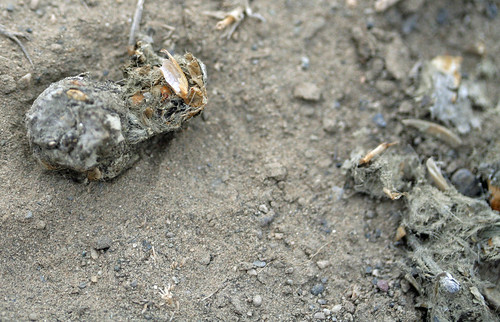
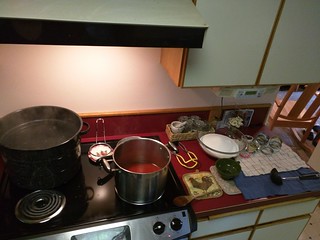
I froze the berries, then cooked them and mashed them up, then dumped them in cheesecloth to get the juice out. (I can't stop myself from squeezing the cheesecloth to get juice out. That's supposed to make the juice cloudy, but I didn't see a big problem.)

RECIPE
4.5 cups of Salmonberry juice
7 cups of white sugar
1 package powdered SureJell
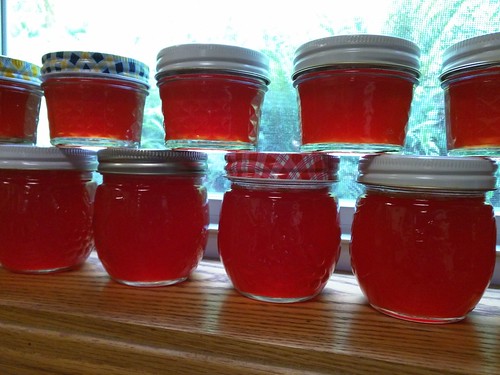
Yield: 9 cups of jelly, packaged in six 8oz jars, and five 4oz jars, and some extra I ate on toast right away.

I see a 4oz jar of Alaskan salmonberry jelly is selling on Amazon for six bucks, I should get on that. 


IMG_20160615_133055

This was my first time tasting salmonberry anything (except fresh). It's very good. Reminiscent of raspberry (go figure), but it's own unique flavor.


Reference:
Pojar, Jim and MacKinnon, Andy, ed. Plants of the Pacific Northwest Coast, Revised, Lone Pine, 2004

Monday, April 4, 2016

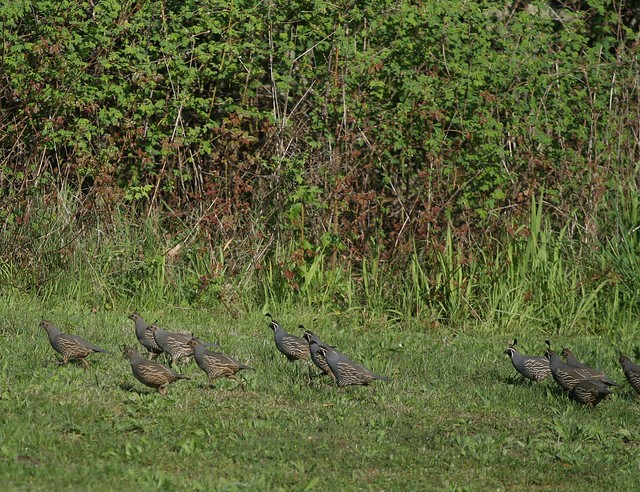
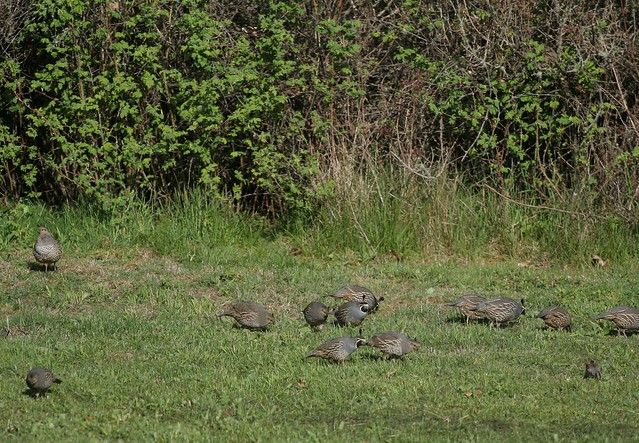
Quail

Some California quail in Finley Wildlife Refuge in early April


  IMG_9799a


IMG_9794a

Saturday, September 12, 2015

Sketch from yesterday

The scene would have been impossible to photograph, but I thought it worth a minute's-worth of sketching to remember: two coyotes by the side of the road, one recently killed, one standing at a distance, panting and looking around, seeming to be at a loss.


The outskirts of Pendleton, Oregon

Friday, May 22, 2015

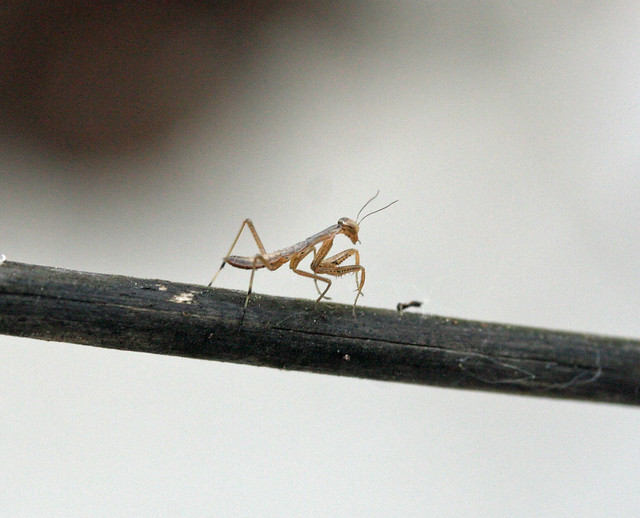
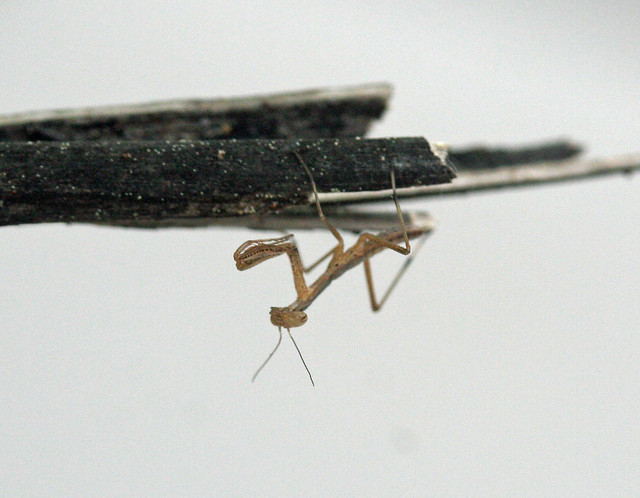
Baby Mantis

Found yesterday in the garden. About half a centimeter long. Probably a non-native Chinese mantis but I don't really know so back to the garden she went.


IMG_9346a


IMG_9423a


Tuesday, March 3, 2015

Agate Hunting

This cliff is about a quarter mile from the river, so I'm sure these are river rocks are from the old river bed. It's a good spot. I can always find at least a double handful of semi-translucent agates within half an hour.


And every now and then, a really nice one:


This is what they look like after going through the rock tumbler:

Thursday, January 15, 2015

Monday, November 24, 2014

Wednesday, October 15, 2014

Coyote Poop

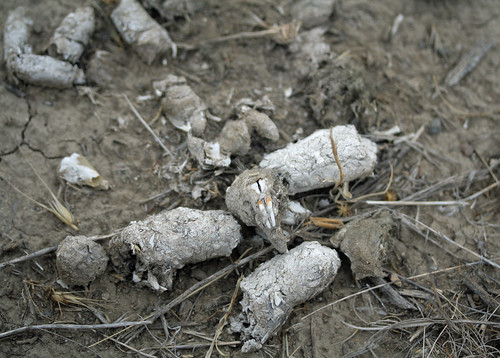
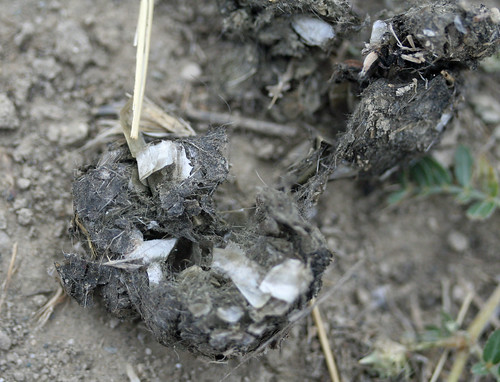
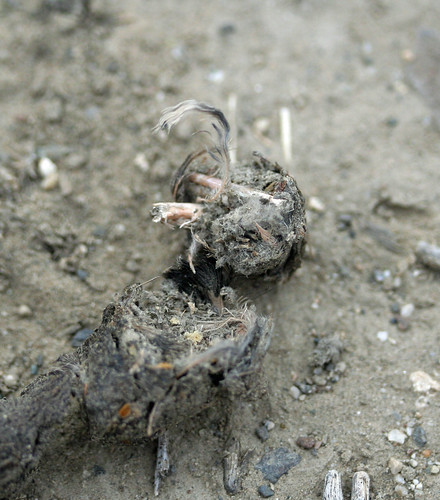
On a recent walk near the house I came across dozens of piles of coyote scat.  It felt like a good day to pull it apart and see what the local charismatic megapredators are eating nowadays. Quite the variety.


Here's the typical coyote scat you could find anywhere in North America. After a couple days it dries to a white color due to the large amount of undigested bone and teeth. Though this is the first time I've seen an entire face sticking out of a poop - learn to chew your food, coyotes!

IMG_8397a


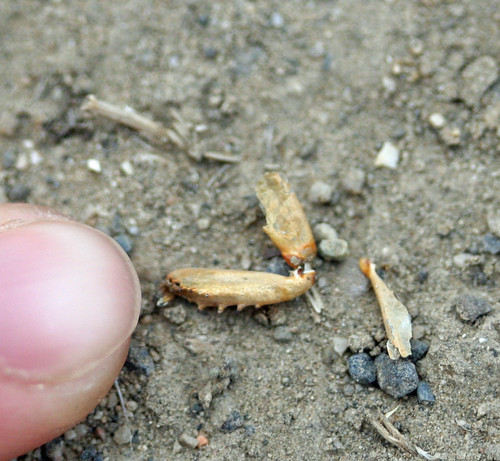
This looks like the foreleg of a mantis. Not surprising either, as they're still around due to the warmish weather we've been having, and big enough to attract the attention of a coyote looking for a crunchy snack.

IMG_8383a

IMG_8385a


Feathers from a small bird.

IMG_8379a


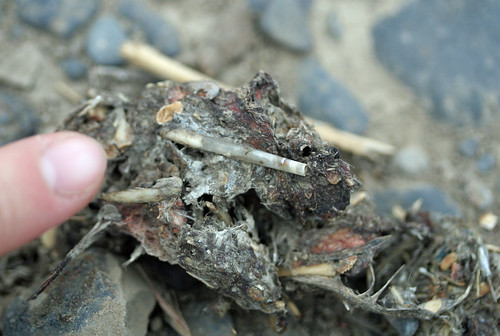
Feather shaft and bones from a slightly larger bird.

IMG_8390a


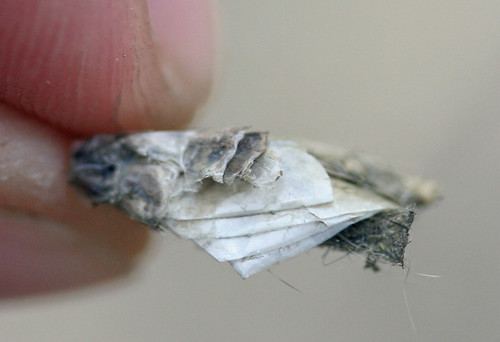
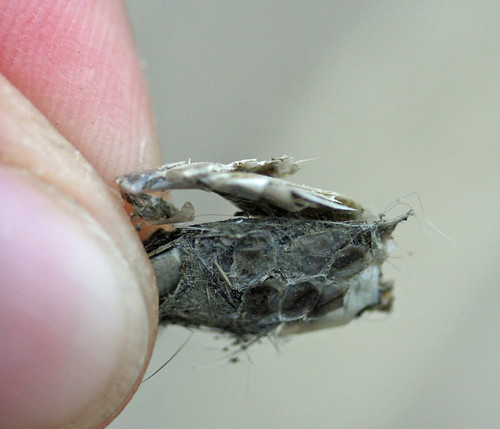
Scales from a reptile, probably a snake, and juding from the size (and knowing how abundant they are right here) most likely a gophor snake.

IMG_8386a

IMG_8387a

IMG_8388a


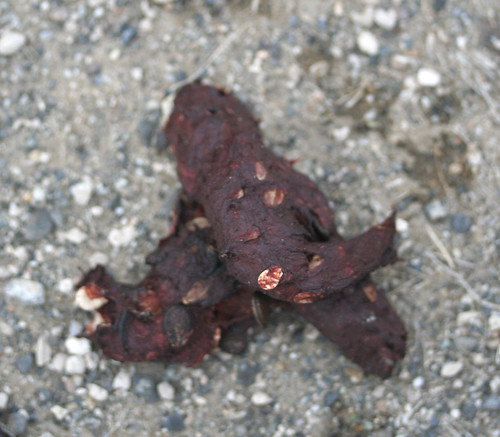
Watermelon seeds (and coloring). Less than a mile from this location is a large watermelon field with hundreds of abandoned melons still sitting out. It wouldn't surpise me in the least to see a coyote eating them. (There were also about a dozen smaller, looser piles nearby. I think someone ate too much candy and got an upset tummy).

IMG_8378a


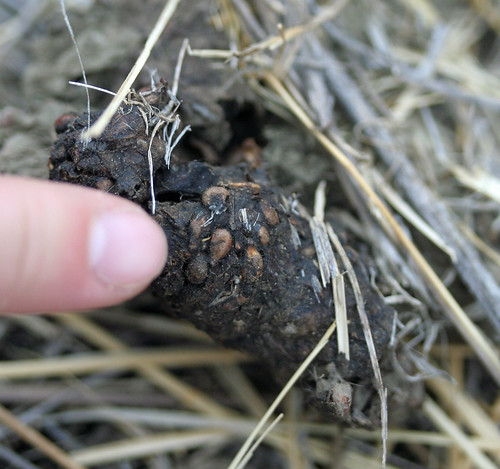
These seeds look suspiciously like apple or pear seeds (any other guesses?) Also abundant in back yards this time of year.

IMG_8399a


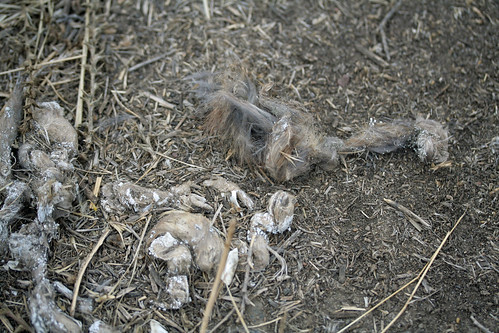
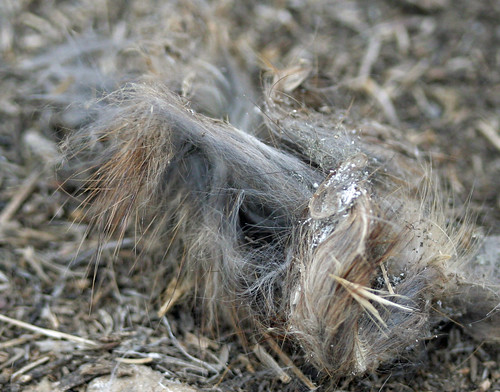
And lastly, this pile of fur right next to this pile of scat. It wasn't digested, is it prey fur, or from the coyotes themselves?

IMG_8395a

IMG_8392a

Friday, September 12, 2014

Camping

I miss the forest. It was good to visit, even if just for a few days.


IMG_8266a


IMG_8323a


IMG_8326a


IMG_8305a


IMG_8350a


IMG_8289a


IMG_8278a


IMG_8260a