Showing posts with label nature's a b*tch. Show all posts

Friday, December 7, 2018

Domestication Stories #2: What it Means to be Alone


Content warning: some violence and gore


Flatnose was going to die. He knew it would happen soon, and he knew he deserved it. He'd accidentally killed his own brother during a squabble. His own father had been the one to begin the banishing-chant, and he hadn't fought it, simply walked out of camp with the clothes he was wearing and a single spear in his hands.

That was over a season ago, and he wasn't quite ready to lay down and let the cold take him. But it might be out of his hands now that winter was fully upon the land. He'd never been great at plant identification, or at trap-making - those had been skills that other family members had excelled at so that he didn't need to. He hadn't eaten anything but bark and lichen for many days, and his last protein had been a handful of moth larvae barely worth the calories expended to dig them out of the rotting stump. This hunt might be his last chance.

So here he was: on his belly on the frozen ground, crawling toward a small group of deer bedded down in some shrubs. He'd been stalking them for hours, and was almost close enough to strike. It was a desperate way to hunt large animals. The best way was to steer a herd into a ravine or bog where they couldn't escape or fight well, but that method required familiar lands, and a family working together. Nearly impossible for a lone man.

Suddenly, he heard something approaching from the hill behind him and to the east, crashing through the brush, making no effort to be stealthy. Flatnose lifted his head and watched in silent despair as the deer sprang from their beds. A pack of wolves ran past him and charged after them. In the span of a few breaths both wolves and deer had run over the next hill and out of sight.

He lay for awhile, listening to the wind and fighting the urge to lay his head on the ground. Wolves were often messengers of the Stone Mother, She may have sent them to tell him it was time to stop hunting and give up. One could never fully know the minds of the Gods, though, and there was one, small hope: if the wolves made a kill, he might be able to scavenge from it.

It took several tries to rise to his feet, he was that weak. He backtracked his own trail to where he'd stashed the small bundle of belongings he'd managed to make and collect since his banishment, and  started to follow the wolves' tracks. It was easy tracking when the trail was this fresh: perfect little paw marks melted in the top layer of frost.

Within a couple hours, he saw birds circling up ahead. The wolves must have made a kill. Would it do him any good, though? Alone, he didn't have a chance of scaring them off, but it was possible that once they'd filled their bellies they would leave - the pack had looked strong and healthy, they may not feel the need to guard the carcass. If he could beat the bears, lions, hyenas, eagles and birds to it, anyway. He crested a ridge and there, at the bottom of the slope, were the wolves. The pack had indeed managed to take down one of the deer, an adult, and were were eating voraciously, the way wolves do, as if it were their last meal. Flatnose's mouth watered at the sight of all that food, so close, and yet untouchable.

He made a fire while he waited. The wolves didn't even seem to care, another jarring sign of his loneliness. A group of humans would have caused a pack of wolves to stop everything to watch them, or maybe even preemptively attack. A lone human held little threat. As long as he kept his distance, they ignored him.

Flatnose huddled by the fire, and concentrated simply to stay awake. He was running out of time. The sun was sinking, and he wasn't sure he could survive another winter night without either calories, or proper shelter. The wolves had slowed down, the two larger ones had finished, and he had some hope he'd be able to try his hand at stealing some meat soon. Just as he thought this, he caught sight of movement out in the distance. A large, dark shadow, coming down from another hill. A lion.

The wolves noticed at about the same time, and turned in unison, hackles and tails raised. Six wolves could take a single lion, but they might not want to risk defending food from such a dangerous foe when they had full bellies. If the lion took possession of the meat, Flatnose chances of getting any disappeared. A lean, lonely lion was much more likely than a fat and healthy wolf pack to guard the carcass or drag the entire remains to a lair and guard it until it was completely eaten.

This, then, must be Her test. He had to do something before the wolves decided to leave. He took a deep breath and threw off his hood and gloves. He broke off the biggest branch of heather he could find, and lit it in the fire. And then, with his only spear in one hand, makeshift torch in the other, he ran down the hill.

He kept wide and far away from the deer carcass, circling to get the lion between him and the pack. It would divide the lion's attention. Some of the wolves looked his way, but the lion was still their priority for the moment. They snarled and danced outside the range of its claws, making feint attacks as the lion was snarled back and swiped at them with deadly claws, slinking closer to the deer. Neither predator wanted to engage quite yet, and there was a temporary standoff. Now or never.

Flatnose only had one spear. He had to aim for a spot that was impossible to miss, that wouldn't simply glance off bone. As he got close to the lion, it stopped and turned toward him, ears pinned and teeth bared. Before it could attack, he threw the torch in its face. It flinched and swatted at the fire. In the one heartbeat that the lion was distracted, Flatnose leapt forward and thrust his spear into the lion's belly. It screamed and spun around, yanking the spear from his hands as the cat swiped wildly at him. He fell backwards, rolling out of reach, but bruising his ribs and elbow in the process.

It was a huge risk, spearing it in the gut. It could make it even stronger and angry, and now it might target him instead of the wolves. He scrambled to his feet as quickly as possible, backing away, but the lion wasn't coming after him yet; it was pawing and chewing at the spear stuck in its body, glancing back and forth between the wolves and Flatnose. In pain, surrounded by threats, it couldn't decide what to do. For a moment, Flatnose felt great sympathy for the lion. It was a gaunt young male, hungry and alone, just like Flatnose. It didn't realize that its life was already over, one way or another.

Mercifully, it didn't need to die the agonizing, drawn-out death of a gut wound, for at that moment, the wolves decided to attack after all. Flatnose stumbled away from the furious swirl of animals as quickly as his weak limbs would carry him. Back to the relative safety of his fire. He was dizzy with exhaustion and relief: he'd attacked a lion, by himself, and survived mostly unhurt.

He couldn't see the battle, obscured by brush and gathering darkness, but he could hear it just fine, and could tell it was not going well for the poor lion. Shortly, everything went quiet and the wolves came trotting back into view. Several were limping, but none seemed seriously hurt. He could swear they seemed smug. They settled in near the deer carcass, laying down to lick at wounds or curl up to sleep. They weren't leaving the area anytime soon. Flatnose wouldn't be eating any venison tonight, but he didn't need it now. He had roast lion in his future.

He made a new pair of torches and took them back down the hill, once again keeping well clear of the wolves and their food. They watched him, but none made a move toward him. Whether it was their exhaustion, full bellies, or that they still didn't see him as a threat, or maybe even that they saw him as an ally who helped them with a common enemy, or simply the grace of the Stone Mother, tonight they would tolerate him. Now that they weren't competition for a meal, he actually hoped they would stay for awhile. After being alone so many months, it was comforting, having other creatures nearby that were neither food nor enemy.

The lion's body was resting just a few lengths from the deer, in a small hollow. Flatnose used the torch to make two new, bigger fires, one on each side of the lion. It might be enough to keep away other scavengers that came in the night. It was all he had the energy for, but he was optimistic. For the first time in awhile, he had some plans to make for the future: Tonight, he would eat until his belly was swollen and painful. Then he would sleep. Then he would get up and eat some more. He would keep the fires going; he would build a shelter; he would find some water to drink; he should try to tan the lion skin, it would be a welcome addition to his pathetic bedroll of stitched-together small animal hides, or maybe he would try to make a water-tight cooking bag so he could make stew, which was a less-wasteful way to cook than roasting. His only spear was shattered, and he was banished from all the sacred yew groves, but perhaps the Stone Mother would see fit to show him the way to a different grove of trees so he could make more. She seemed to think he should live for tonight, maybe he would live through the winter after all.


~~*~~


Notes:
While I was in the middle of writing this story, an extremely pertinent interview was published in Psychology Today: 'Dumping the Dog Domestication Dump Theory Once and for All' I highly recommend reading it.

'What it means to be alone' takes place 150,000 years ago. Not much has changed since the time of SmallWatcher. Although the climate has fluctuated in that time, both people and wolves have adapted with no apparent changes to their habits or tool-uses. Flatnose's people, Neanderthals, still dominate the hunting grounds of Eurasia, living in traveling family groups and sharing the landscape with wolves and other predators. The creature we know today as the dog is still 100,000 years away from being fully created, but humans and wolves still have frequent interactions that are leading up to that final domestication.

Humans and wolves share what Christoph Jung in the above interview describes as, "astonishing similarities in their social behavior, their psychology and social communication." Both are also excellent hunters. Part of being a successful hunter, especially a human with a big brain, is to put yourself inside the mind of other animals, so you can predict their moves and habits. From there, it's a short step for a social creature to sympathize and feel close kinship to other animals, especially predators that are so like himself, even when those predators are often competition for the same food.

Monday, February 4, 2013

Pregnancy Calender: Week 14-22

Week 14-16
How big is your baby?
About the size of a newborn Daschund.

The fetus now looks like a baby. It hiccups. It swallows. It pees. It has eyelids to cover its alien eyeballs.

Week 17-19
How big is your baby?
About the size of a newborn Boston Terrier.

The hiccups continue, and this is about the time the woman could start to feel movements. THE QUICKENING HAS BEGUN.

Week 20-22
How big is your baby?
About the size of a newborn border collie.

This is the age you can get an ultrasound to determine the gender of your baby with pretty good accuracy. This common (but not actually routine) procedure is, of course, one of the most recognized parts of pregnancy because its so often featured on TV/movies.

Alas, week 22 is when your fetus finally looses its tail. (Well, for most babies that is).


Monday, November 22, 2010

The Omnivore's Dilema

I finished this book awhile ago. Here are some things that have been percolating in my mind. (Yes, I'm the type that highlights and puts tabs in my books.)

Page 7: "...linking us, through what we eat, to the fertility of the earth and the energy of the sun."

One of the more memorable learning moments I had when I was little was my dad explaining that everything we eat and use ultimately was either dug out of the earth or grown on top of it. It's obvious when you think about it, but it was a profound moment for my little brain.

Page 23: "...indeed, there is every reason to believe that corn has succeeded in domesticating us."

Hah hah, yes.

Page 55: the author describes BT corn as "corn genetically engineered to produces its own pesticide"

A technically correct but loaded description. He must know well that 99% of his audience considers 'pesticide' a bad, scary word. Inserting BT genes into corn should be at the bottom of our list or worries about risks from chemicals or industrial agriculture, and it doesn't deserve all the bad press it gets. The BT toxin is practically non-toxic for humans. Which can't be said for most other pesticides used on food crops. It doesn't deserve to be lumped together with the other pesticides we use. It can even be used in organic agriculture.

Page 63: "Cargill is the biggest privately held company in the world."

holy shit, didn't know that.

Page 69: Pollan drily describes the begining life of a beef steer. Although his description is dry, his disapproval of the impersonal nature (not just the pain) is implied.

Some things bother me about farming animals, some don't: AI doesn't bother me (heck, some cows would probably prefer it, given a choice), not giving animals true names doesn't bother me; you could argue that it's the first step on a slipperly slope of thinking of living, breathing, thinking creatures as objects that can't feel pain, but I knew plenty of 4H kids growing up who named their steers "Burger" and "T-bone" and names didn't seem to make a difference in the (excellent) quality of care.

Page 71: the cattle rancher in South Dakota tells the author that in his grandfather's day, slaughter age for a cow was 4 or 5 years old, in the '50's it was 2-3, and now it's 14-16 months.

Page 126: Reading the description of Polyface farm - 100 acres that produces an abunadance of food (both plant and animal) in harmony with nature.

A good place to start with revamping our food system is to have more farms like this. Now, please.

Page 132: "If I said I was organic, people would fuss at me for getting feed corn from a neighbor who might be using atrazine...There are a whole lot more variables in making the right decision than does the chicken feed have chemicals or not."

I love Polyface farm. I have a rant on "organic" standards.

Page 139: he describes ultrapasteurization as "a high-heat process that damages [milk's] nutritional quality"

I quibble, sir. Where is your data on that, exactly?

Page 144: this 'brown foods' movement at the begining of the organic movement I've never heard of before. Intriguing.

Page 148: "...so that when the synthetic nitrogen fed to plants makes them more attractive to insects and vulnerable to disease... the farmer turns to chemical pesticides to fix his broken machine." and "on a healthy farm pests would be no more prevalent than in a healthy wood or pasture".

Um, no. Farmers have been using pesticides to reduce crop loses for thousands of years. We've always been (and always will be) in competition with bugs and weeds for our food, and will always need some kind of pest control. Industrial agriculture may be worse, (and as much as I support the idea of holistic farming) but I don't buy it that 'nature' will take care of all things. Nature is a bitch, and her only goal is to keep balance. Trying to grow any kind of crop represents an unbalance of delicious food, which will always bring the pests to eat it. No matter how healthy your soil and robust your micro ecosystem.

Page 156: Pollan sums up Kahn's philosophy about industrial organic: "If the consumer wants an organic Twinkie, then we should give it to him."

Page 157: the description of Horizon Organic milk's dairy farm in Idaho: thousands of dairy cows milling around a dry lot eating 'organic' feed shipped in from thousands of miles away and collecting manure in ponds.

Yep. The public asked for an organic twinkie, and they got it, didn't they.

Also, the excuses of Horizon's execs about why they must farm dairy cows this way just makes me roll my eyes. Tillimook Cheese Factory milks thousands of cows every day, and they do it with pastures and grazing cows and without an organic label. Tillamook easily falls under the definition of 'industrial' farming yet they keep a small farm feel. If they can do it, so can others.

Page 164: He has a point about industrial organic. It's not perfect, and there are far too many compromises, but if nothing else it's better than before. Just that one large company in California has 25,000 organic acres, probably eliminating 270,000 lbs of pesticide and 8,000,000 lbs of petrochemical fertilizer.

Monday, March 22, 2010

Shit

We just went to the vet. Three rats went with us, two came back.

RIP Bluray

That's about all I got today.

IMG_4450

Thursday, March 11, 2010

"Why don't they just shoot them?"

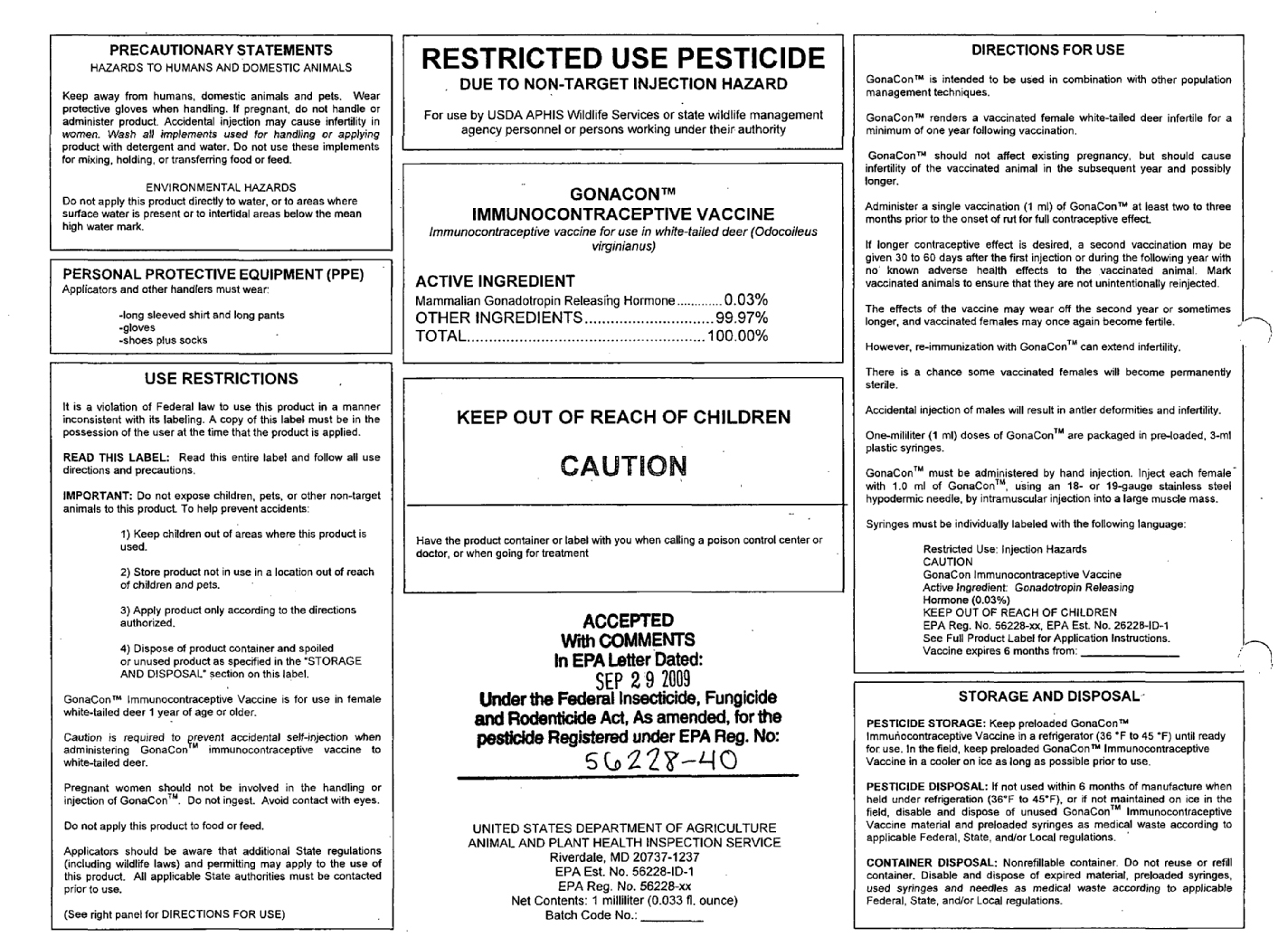
The title of this post is what my co-worker (a vegetarian and self-described "bleeding heart") said when I showed her the label for this new pesticide product:

deer contraceptive
Click to enlarge. Sorry for the blurriness. This is a screen grab of a scan of a photocopy. Thanks, EPA. You can access the original by going here and searching for EPA registration number 56228-40 or by going to regulations.gov and searching for docket number EPA-HQ-OPP-2009-0776

You may have heard the rumors that USDA was considering contraception as population control for deer (and wild horses and goats). They're apparently moving forward with this plan if they bothered to go through the process of registering a product with EPA (which confuses me - vaccines are NEVER registered as pesticides, they fall under FDA's jurisdiction. Why the exception for this one?)

Note that this vaccine can only be applied by hand. That means the animal first has to be trapped or snared, leading to great stress on the animal. Not to mention being extremely expensive.

It's only guaranteed to last for a year. Depending on life expectancy, it's safe to estimate that you'd have to treat the same individuals at least several times in their life.

USDA cites "great public interest" for their reason for pursuing this form of population control. I believe it. "Great public interest" was also the reason USDA pursued and eventually implemented the incredibly flawed National Organic Standards. I appreciate a government agency that's willing to listen to the public. But this is just ridiculous.

Hunting is known to be very effective for deer population control. Not only does it NOT require state or federal money to implement (and in fact generates money through purchase of licenses and tags), it is arguably more humane than trapping/snaring/tranquilizing. It's certainly more humane than starvation, and gives the hunter and his/her family a source of environmentally friendly protein to eat. This sounds like win-win to me.

NPR ran a story recently about this type of special hunt in Connecticut where deer had reached densities of up to 60 per square mile. (Also, do you notice that many wildlife biologists are also hunters/pro-hunting? I thought it was just an Oregon thing, but apparently not).

I do understand people's concern about risks. Some of these parks are very close to houses. Maybe contraception could be useful in small, isolated areas where there's no safe way to discharge a firearm. But, forgive me for being so blunt, if you're going to go to the trouble of trapping or tranqing an animal, why not just kill it right there? Why submit them to multiple trapping and handling and then releasing them back into habitat where they'll still be at risk of starvation?

I've worked for USDA. They can't even afford to maintain their Forest Service roads or rest areas even with fees and even in high traffic areas. Where are they going to get the money to implement contraceptive-based population control program that actually works?

One way or the other, whether it's cruelty through neglect because we removed their natural predators, or hitting them with cars, or trapping and vaccinating or relocating or hunting, humans are going to intervene in these animals lives. We have to choose the most humane way to do so. I have a feeling that hunting is still under-utilized for population control simply because so many people are thoughtlessly anti-hunting.

Dear USDA: Spend some of the money going toward this whole program on educating the public about hunting. Maybe show some ribby, tick-infested deer and their dying fawns staggering through the park they've denuded of vegetation and getting hit by cars during their desperate search for food. Maybe it will get through to some people that hunting is not necessarily evil.

Saturday, September 26, 2009

"Natural is Better!"

I hate when people argue thoughtlessly from this stance.

Check out the teeth of this wild dog (living the most natural life possible).

Tuesday, July 28, 2009

hace calor

IMG_1167a

I felt like we were battening down the hatches for a storm. It's supposed to get up to 108 degrees today, which is ridiculous for western Oregon.

Before work this morning, I watered the garden, put the rats in the travel carriers and put them in the bedroom (the only room with AC). The dog is in her crate in there, of course, and the door is shut for fear the poor little unit kills itself trying to cool the whole house. The cats must try to survive with out AC, but I filled the water dish to the brim which always attracts them to drink more (and play in it and splash it all over the kitchen floor). I also shut all the windows and blinds, which should keep it below 90. The cats (whose ancestors lived in the desert) and the snake (ancestors from central America) will probably survive.

Anyone else beating the heat?