Showing posts with label breed traits or lack thereof. Show all posts

Tuesday, October 13, 2015

Cowdogs of Eastern Oregon

A little background: when I moved to Eastern Oregon from the west side of the state in 2010, I immediately noticed that there were border collies everywhere. Every flatbed seemed to have one, and when I worked at the mixed-practice vet clinic that served a lot of the ranches, I met even more of them. Border collies and crosses are the most popular stock dog in Eastern Oregon and Western Idaho. And I'm fairly certain that the majority of them are not registered with any pedigree registry.

This is a stark contrast to the image put forth by vocal online border collie groups who think of themselves as WORKING (in all caps) people. Their dogs are registered with some kind of working dog registry like ABCA or ISDS, and, even though these registries are technically "open", often the dogs are as inbred as the "show ring" dogs, and suffer from popular sire effects, among other problems. These people tend to idealize the trial sheep dog, while putting down dogs who work cattle, even though sheep is a dying industry and there are many more actual working cattle ranches in north America. These ranchers are sort of left in their own quiet niche, doing things the way they've been done for many years, including things like outcrossing, crossbreeding, keeping and selling pet dogs, breeding dogs that are "good enough", instead of only "best to the best"... and other "shocking" activities, virtually unacknowledged by the internet or by the registry folks.

I want to hear more from the local ranchers about their dogs. I'm starting by interviewing my friend and former coworker Jess Schiller because she has some neat dogs. Let me show you them:

(All photos copyright Jess Schiller and used with permission)

----------------------------------------

Me: Can you start by telling people a little about the ranch and your dogs?

Jess: My husband Pat's family homesteaded this area four generations ago. I'm not good on the details, but Antone Vey came over from Portugal and started raising sheep. Since then the ranch has converted to a cattle operation starting with Herefords. Pat took out his first loan for cows when he was 18 and bought 40 pair from the Spray area and now we are up to 140 mama cows mostly red angus cross. Keeping up with the red tradition in his family.

We raise calves for market and potential breeder replacements for our herd. What we are is range managers and we use our cows as the means to do so. The term "graze it don't blaze it" well that's what we try to do. We graze on private ground both on Buttercreek and in Starkey. Pat's grandmother's cows however are on private and jointly managed US Forest Service allotments.

We start calving around end of January/February and we raise the calves and maintain the mamas until we sell the calves around October. We "summer" (move to summer grazing in the mountains) May to October-ish in Starkey. Then we move them "home" to Buttercreek from October to May. The pack is used to help us gather and sort. We have at least 4000 acres here and usually it's just Pat and I so they save our horses a lot of miles here and up in the mountains.

The girls Zee and Tip, who you've met, were the best working pair we've had.

Zee is really good at going a long ways out and bringing cows up top. She was great at pushing until she got hurt. Now Pat is so scared of her getting hurt because she's his baby and bull-headed, so she  doesn't get to work much. Zee has raised five litters of great working pups so she's out of practice with all of it but I have her helping me teach her son Cap who ended up being way too timid for Pat but is great for me.

Zee

Then we have Gus. He's a heeler/border collie mix. His job is a brush dog. The cows get into thick stuff, he goes in and they WILL come out.

Zip is Pat's boy and daddy to two litters out of Zee. We got him from my uncle three years ago because he had quit his job and didn't want Zip to waste away in a yard in town. It took Pat less than an hour to bond and after that Zip actually tried biting my uncle's girlfriend. He went through a grumpy strange, but not so much any more. He is such an attention whore it's ridiculous. But he is Pat's A number 1 cow dog. I'll have to send you videos it's so awesome to watch him work. So quiet and picks on the cows but if you throw a stick he's the biggest goober ever.

We have seven dogs right now, and the rest are pets. Rhett was a rescue from my cousin who realized border collies need to work. He's great with [my toddler] but not...so .. smart with cows. He's gonna get hurt with how he barrels in after cows and doesn't pay attention to what's going on. And Peter is my brother's dog. He's just special we can keep it at that.

First question(s): are any of your dogs, or any dogs in your extended family, registered with any breed registry? or have you ever entered any of your dogs in any kind of competition? (have you even heard of ABCA or ISDS?)

Negative to all. I did dog 4H once with my dad's cow dog... needless to say it didn't go well. He was getting pretty pissed with the baths for one and then the fact that I'm pretty sure he thought the show was the dumbest thing ever. Kinda like going for a pleasure ride with one of our ranch horses. They go out expecting to work.

Pat's family use to do sheep dog trials when his grandpa was alive. I'm pretty sure they had some spendy dogs from over seas. But those dogs have been gone for a long time.

Any of those trial dogs have decedents still around?

Not as far as I know. I'll ask Pat the next time I talk to him

After meeting all the different types of stock dogs around here, it seems to me that most ranchers don't care about  how "pure" their dogs' bloodlines are or bother with a working registry.

I think registered dogs in the ranching world are like papered horses. It's nice and really interesting to know their background but papers don't make the animal. And you can go out and spend a lot of money on a dog to find out the mutt you raised is better than that one.

So where did all your dogs come from? Obviously in the last few years you breed your own, but further back than that?

Let's see. Tip is Pat's red dog he got from Ryan Raymond a rancher out of Pilot Rock. We are pretty sure she has a little Carter in her. Which is actually a breed of stock dog that was developed in Long Creek. We sold Pat Carter one of our pups a few years ago.

Zee my lil girl came from a couple in Heppner that we've known for a long time. They have a long line of awesome girls and I think they are looking to start training for other people.

Zip, Pat's male that we got the last two litters out of, came from a rancher out of Arlington at the time him and his ex-wife raised dogs as well.

And Gus came from a neighbor. He is the heeler cross. Cap came out of him and Zee. He's the one I've been trying to spend a lot of time with because he is pretty timid and doesn't handle Pat's aggressive tone very well but he's coming along.

Cap guarding the hole while Jess fixed a gate the bulls knocked down


Would you say that your dogs are pretty typical of other ranchers in the area? You guys aren't an outlier in how you source/use/breed?

Nope pretty typical. It's all personal preference and you know border collies they are smart and you can teach them about anything and they are one-person dogs. Makes it pretty easy to like your dogs better than the neighbors'.

I know some people go out of area to get dogs. My girlfriend Jamie is trying out a new breed called an Idaho shag, I think it's an Airedale cross. She crosses that with a heeler you'll end up with about the dumbest block head. But those cows will move!

But really if someone is looking for a good rounded dog there is no reason to go too far. There isn't a lack of border collies around here that's for sure.

Can you talk a bit more about Tip? Is she the one I met who's red with a natural bob tail? she caught my eye right away because she doesn't have a "classic" border collie look. A lot of "registry snobs" would call her a mongrel. Would you call her a "border collie"?

Lol, they'd probably think our whole pack is mongrels. Tip's a great little dog. For the longest time we argued that she was a red border collie. Kinda like how with black angus every once in awhile they have a red one. But we are starting to think she has a little Carter in her. She was the only red bob tailed in her litter and I'm pretty sure both her parents were black and white but I'd have to confirm that with Pat. She's retired with benefits now since she fell out of a truck and broke her leg and hip. By the way, I dock the tails of all our pups and we prefer dock-tailed dogs. And I know some would argue that we've killed their balance but my dad's old Ed dog (the cow dog I tried showing in 4H) had a docked tail and he kept right up with those "sheep dogs" of West's (they use to run several bands of sheep on Rhea creek). When they loaded them the dogs would run across the sheeps' backs and Ed's lack of tail didn't seem to slow him down.

A rare photo of Tip, who hates cameras


I don't know much about the Carter, can you tell me a bit about that?

The Carter breed kinda died out. It's hard to find them any more. It was never wide-spread. But there were a few around. Pretty much one family started the breed. Short stalky curly breed. A few families around Heppner had some and I can't off the top of my head tell you where they came from. My father-in-law had one and he currently has a very old carter/Airedale cross. He is about one of the last ones I know of around here. Pat Carter had talked about maybe trying again. It'd be cool if he did. I have sold two pups down in the Long Creek area (90 miles south of Pendleton; Dirty rotten rough country. Hard on horses and dogs) and as far as I know they're doing great.

You may not realize this, but many of these "registry" folks I mentioned say it's not OK to crossbreed/outcross, or at least they're very afraid of it. It seems ridiculous to me. They act as if the only "good" working dogs are the ones with an inbred pedigree that goes back 40 generations.

OK my argument to that...it's just like cattle. Your cross bred cattle the calves are gonna come out stronger healthier and gain better than the pure-breds due to being heterogenous. It's been scientifically proven that cross bred animals do better. Now it's not quite the same in dogs since don't eat them in this country. But if you continue to breed the brains out of these animals all your gonna end up with is an animal that can run a course. If I'm not mistaken sheep trial courses are usually pretty similar. So all your asking that animal to do is look amazing for one small task. I'm a sucker for a cleaned up long coated border collie mostly because I know mine will never look like that! They look great and they can successfully do the exact same thing you asked them to do last weekend. Just like barrel horses it's a pattern they've done repeatedly and that's what they are gonna do.

I'm not trashing sheep dogs they are amazing to watch, but when a stock dog puts a hundred pair through a gate without a wreck and you're a half mile away on another ridge...  well that's pretty amazing to watch, too.


Many anti-crossbreeding people say that they "need a dog that will do work" and they can't afford to cross (for example, like a 50/50 Airedale/border collie) because the first generation wouldn't be able to work and they'd have a whole litter of useless puppies. What do you personally do, and what do the other ranchers you know do, with dogs they breed who end up being bad workers?

I guess I've never heard that. It sounds like an old wives tale to me. I think you could end up with a whole batch of purebred that don't work, either. Honestly I have one that doesn't work very well. He is probably one of the "purest" ones I have. And I don't think it really has any thing to do with the dog. At the time I was building fence when I got him so he became more of a pack dog than a stock dog. And his personality to I don't think he has the attention span to pay attention long enough for him to actually asses the situation. Maybe if I had started him on cows first maybe it would be different. He has it. But he gets so excited he barrels in and causes a wreck and then doesn't pay attention and almost get ran over.

I think the ones that don't work it has more to do with the handlers. These people who get these dogs for pets they can't expect them to be a house dog for most of their lives and then go out and chase a cow. Yes they do have natural instinct but they still need to be taught. Pat spent a lot of time on Tip and in turn she taught Zee and now Zee is teaching Cap. Having a mature dog with pups helps soo much.

As far as what everyone else does with bad workers I'm sure you could guess what some do. But I don't think that's usually the case. I think if you spend the time with the animal and be patient you'll get a fine worker. Also border collies are famous for being timid. It took Zee three years to stop running back to the pickup when Pat was hollering at the cows. Now it just makes her go harder.

Cap (left) and his dam, Zee

Thursday, September 10, 2015

Quick Question

Why am I forced to call the one on the left a "pit bull mix", but the other I could call simply a "mixed breed"?

I like that animal shelters are starting to do away with breed identification of mixy mutts, calling them "All American" or something similar. Because there is no point to breed ID when the mix is too mixed.

Sunday, May 11, 2014

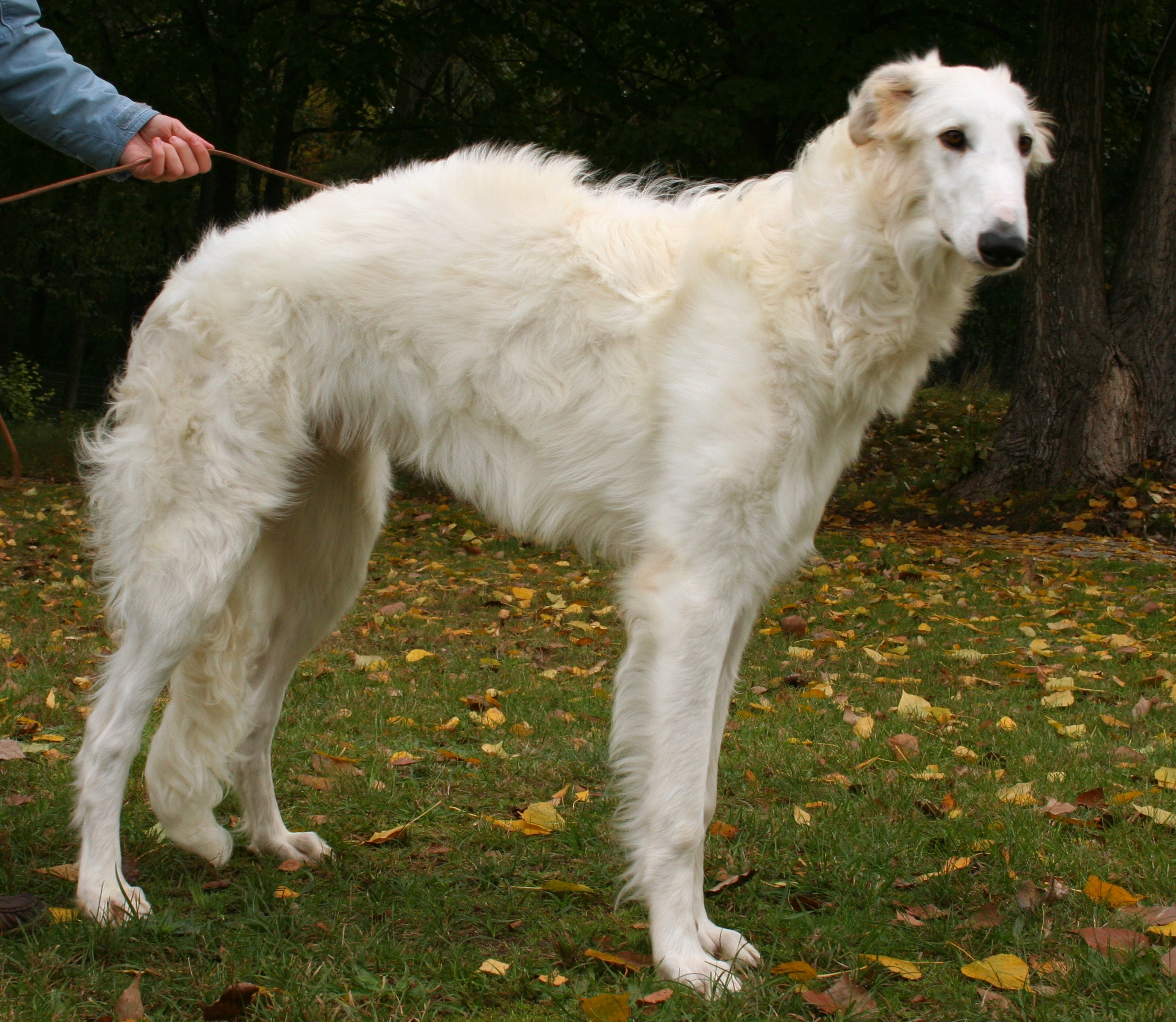
I Don't Like The AKC: Borzoi Edition

A brief and totally weird anecdotal thing:

I've handled a lot of dogs (including other sighthounds), and the handful of Borzoi I've laid hands on (all "purebred" AKC versions)  have all felt... funny to me.

They're large dogs that look like they're supposed to be smaller, somehow. They're spindly and narrow, with wispy hair with that weird (and totally unnecessary) humped back and under my hands they feel... too light. Like they  have bones made of balsa wood, or they're actually hollow on the inside. That ridiculously extreme roman nose seems like it's full of air. Certainly, they feel delicate: fine china that would fall apart with too much pressure. Now that I'm writing this out, it occurs to me that all borzoi I've met, no matter the age, feel the way an old or sick dog does under your hands.


My friend and fellow vet tech Joellyn once told me she "prefers a dog she can thump on" (and then gave an affectionate thump on the ribs of her border collie for emphasis). I feel the same way; I don't like tiny shivery dogs.

I don't feel like AKC borzoi are dogs that can be thumped on.

Kind of sad for a breed whose other name is Russian Wolfhound and that supposedly descends from great and tough hunters of the Russian plains.

I wouldn't have thought of this at all, except I saw this recent post about some "real" borzoi (as in: non-AKC dogs in their country of origin, doing the job they were bred for, instead of being overbred to look a certain way for a show ring):


Now there's a dog you can thump on.

Wednesday, February 19, 2014

Redefining "Responsible Breeder"

Due to my line of work, I often hear a lot of hate leveled at dog breeders.

If pressed, most rescuers will grudgedly admit that breeding dogs is OK, but only if it's done by "responsible breeders". Trouble is, our current, loose definition of "responsible breeder" is all wrong, and will hurt the long-term health of the dogs we love so much.


For example, consider this sale ad that came through my Facebook feed last year for Chesapeake Bay Retriever / German Shorthair Pointer cross puppies:


Or, for another example: that same year, a friend of mine had a litter of fourteen Labrador / German shorthair pointer cross puppies. They sold like hotcakes. Some people drove hundreds of miles to pick one up. Some went to pet homes, but most went to people who wanted an all-around hunting dog.


Both examples we'd probably call "backyard breeders". Bad, irresponsible people making mutts and taking away homes from shelter dogs, right? And yet we, as a dog-loving rescue community, should not only be OK with these breeders, we should be glad they bred their dogs. And we should hope that a few of the puppies from this litter grow up to have a few puppies of their own. 

Why? Because our current definition of "responsible breeding" is leading to a devastating loss of genetic diversity, increased accumulation of genetic disease, and dogs that suffer from extreme physical deformities that affect their quality of life.

This is a real problem that hardly anyone is talking about. Inbreeding causes problems all by itself, and so many people either aren't thinking about this, or are in denial about it. There is also the related but separate problem of genetic disorders that build up in purebred dogs over time. So many "responsible" dog breeders think that if they just breed "the best to the best", it will solve all genetic problems. This just isn't true.


There is no earthly reason that "responsible" should mean "pure bred". Crossbreeds are, on average, healthier and live longer than their "pure bred" counterparts. Closed stud books are a new and not terribly great idea. Most people also forget that closed stud books ignore breed histories where one or more closely related breeds traditionally mixed, but are now isolated. For no good reason.

The examples I gave above are not mutts. They are a  crossbreed of two complimentary dogs. This particular example happen to be hunting dogs, but crossbreeding is a fine idea if you want to make a dog who's job is to be a cute companion, too.

We rescue folks act like the shelters are over-flowing with puppies "from irresponsible breeders", but look around - you never see a lot of puppies in a shelter, or if you do, you won't see the same puppies if you visit a week later. Puppies are always in high demand. At the Oregon Humane Society, the largest animal shelter in Oregon, puppies are usually adopted the same day they hit the adoption room floor. They sometimes have to call other shelters looking for more puppies because they have more demand than supply.


There are a lot of reasons that dogs end up in shelters, but it's not because of "too many puppies". Take the two examples at the top of the page - those two litters of puppies went to homes that wouldn't have gone to a shelter anyway.


Now, let's look at a "responsible breeder".

Photo by Anne Goetz*

Anne Latimer Goetz breeds purebred, AKC-registered Neapolitan Mastiffs. She takes her dogs to shows, and wins prizes. They sleep in the house with her, get lots of cuddles and treats, and have a nice big yard to play in. She doesn't breed very often, and sells the puppies for a lot of money to select homes with a contract. She always allows buyers to meet the parents. I'm checking off all the little boxes on this form and, hey, it looks like we have bonafide "responsible breeder", right?

Photo by Anne Goetz*

Except that this woman is scum who should be criminally charged with animal abuse. The dogs she creates on purpose are deformed freaks who have never lived a fully comfortable day in their short, pain-filled lives. And that's just from their physical deformities. They're also an inbred, genetic mess, riddled with heritable disease that Anne (and so many like her) ignore or deny to avoid changing the way they do business.

Does Anne love her dogs? Probably. Is she an ethical dog breeder? Absolutely not.

Throw out the damn checklist, and stop using "backyard breeder" like it's a four-letter word. It's people like Anne who should be shunned from polite society. And she certainly doesn't deserve to be called "responsible".


EDITED 4/24/14: here are my revised suggested guidelines for what an ethical breeder actually looks like.


*Photos used under Fair Use doctrine for purposes of scholarly criticism. In case that wasn't clear.


Thursday, January 2, 2014

Anecdotal Pit Bulls do Pinterest


Do you need a scientific study to "prove" that pit bulls can make good pets? Or that they can be good at sports, or good working dogs, or safe around kids and small animals and other dogs? No. For that, all you need are anecdotes and experience. 

I've been collecting pit bull related images since I discovered Pinterest last year.

On my board, you'll see pit bulls*

...playing in dog parks
...playing on the beach
...going for leash walks
...going for off-leash walks
...in the woods
...in the city

...living with other dogs
...relaxing with other dogs
...playing with other dogs
...relaxing with other animals
...relaxing on porches
...relaxing on couches and beds

...saving lives
...painted in portraits
...showcased by their breeders
...dying of old age
...protecting livestock
...hanging out with livestock
...being police dogs
...doing SAR 
...being service dogs
...doing agility
...doing weight pull
...doing disc sports
...doing dock diving
...doing flyball
...owned by rich people
...owned by middle class people
...owned by poor people
...with cropped ears
...with natural ears
...with spiked collars and studded harnesses
...in stupid, undignified costumes
...(you won't see many being crawled on by children, despite the large number available, because seeing dogs get crawled on by children makes me cringe)


What do all these anecdotes actually prove? A few simple things:

1) There is no single "pit bull culture". There is no dichotomy (as some haters would have you believe), of either felon-thug-owners or clueless-yuppie-owners. Pit bulls are owned by lots of different types of people and doing different things in different places.

2) Not all pit bull breeders are the problem. Breeding them on purpose can actually be OK.

3) Whether you like it or not, there are a lot of loved pet pitties out there.


I'm willing to accept arguments that there's some kind of "pit bull problem" in the US. Lot's of pit bulls are dying in shelters. They're one of the most popular types of dogs to be owned by dog fighters and criminals. What I don't accept are assertations that I hear all the time: pit bulls shouldn't be adopted out by shelters/to families/live with other dogs or animals/bred/be in dog parks/are ticking time bombs/good for nothing/untrustworthy/unneeded.

I don't have the answers. But I know for sure that, whatever the problem is, it isn't going to be solved by BSL, negative media bias, or magically making them all sterile.


*My definition of "pit bull" in this case is any dog that would be labeled such by your average shelter and/or be targeted by BSL. Therefore, any dog with short hair and a large head could qualify. Hard to define, but you know one when you see one, amirite?


Thursday, September 5, 2013

Yet another neutral week for pit bulls

IMG_3533
A dog I met a few years ago in a shelter in Corvallis, OR. Pretty unremarkable. Liked people. Liked to play fetch. She was adopted by a family. There would be no story here except for the fact she is a pit bull mix.

So, there's this post that came out awhile ago. Written by a smart guy who's knowledgeable about dogs, so, like, he has all these new insights about pit bulls and gonna skool us all.

Whatever. Same shit, different day.

And thus I break it down:


The title of the post is "Bad Week for Pit Bulls", but it should probably be titled, "I'm Just Really Mad at People Who Like Pit Bulls".

He starts by stating an intention to review a book, Unleashed: The phenomena of status dogs and weapon dogs, that Landauer hopes will be "tackling the dogs and their owners in terms of criminology and sociology instead of the suburban dog-mommy perspective on “saved” and “rescued” and “misunderstood” pit bulls that’s all too common in the dog blog sphere".

He hasn't read it, and yet: "...Reviews on Amazon suggest I’ll be disappointed and that the author reverts to the same old cliches about “only the mixed bred ones are bad” and “they’re nanny dogs!” nonsense."


He is so disappointed that this sciencey-sounding book doesn't seem to reinforce his stance on pit bulls! Apparently he doesn't read books to learn things, but only as reference for already-formed opinions.

He then takes another swipe at pit bull advocates and states "...topics most pibble-mommies don’t want to talk about: the image and use of these dogs as vicious killers by criminal thugs."

People who blog about their pet pit bulls don't want to talk about the use of pit bulls by criminals? Which blogs has he been reading? Because this type of blogger talks about this subject a lot... just not in a context that Landauer approves. They tend to focus on the positive or neutral aspects of pit bulls. When pit bull advocates focus on negatives, it's mostly about the criminals' actions, not specific acts of violence by the dogs themselves.

People who don't like pit bulls, on the other hand, really like to focus on individual acts of violence from the dogs. Something they have in common with dog-fighters, come to think of it. That's why they, like Landauer, prefer context-free news stories instead of the day-to-day details of a dog blog.

Everyone already knows that pit bulls are used for dog fighting and as guard dogs by criminals. What Landauer resents is not that people aren't aware that dogs are being used by criminals, but that they don't share his opinions about those dogs. The thing about all these dog blogs that he so despises isn't that all the observations of pit bulls aren't true, but that they aren't the ones he wants to focus on.

He has a small point in that, yeah, there are definitely pit bull advocates out there who exaggerate in the other direction, to the point of lying to themselves and others; some even claim that pit bulls are incapable of harming people/other dogs without some kind of extreme abuse/training/etc, which of course isn't true. Some dogs are perfectly good at being dangerous without training or abuse. Like so many arguments from pit bull haters, this is a red herring - most pit advocates are very reasonable about the risks of dogs and point out that ANY dog can seriously injure a person or another dog, and also point out that there are many, many pit bulls that make good family pets.This is verifiablly true from a million anecdotes, but, again, not the truth that he wants everyone focused on.


The main part of the blog is a series of three stories involivng pit bulls from around the internet. 
I think the title of the post, "Bad Week for Pit Bulls" is supposed to imply that these three situations indicate some kind of ongoing trend that was just especially bad this week, and also that they reflect on every single pit bull out there (a common trend with pit bull haters). It's unimpressive, as far as trends go: one news story about an owner who can't control her large, unneutered dog and let it kill a neighbor's pomeranian; one Reddit post (where we don't even know a pit bull was involved); and one Facebook kerfluffle where a dog-fighter in Mexico posted video of his dog(s) killing restrained cats.


"It’s important to remember that this is the reality of pit bull culture..."

That's the reality of SOME "pit bull culture". I can think of several different types of pit bull cultures and Landauer even mentions one in the same blog post; "pibble-mommies" are a distinct and recognizable cliche in the same manner of the dog-fighting-Mexican stereotype.

"This is happening in nice neighborhoods by all sorts of wayward youth who view the bully landrace as empowering, status symbols, and a source of entertainment."

So glad he took the time to point this out. NO ONE WAS AWARE OF THIS.

"... I see too many people on crusades to clean up the bully breeds’ image and not clean up the culture itself or even be honest with what is going on"

OK, so lets talk about "thug culture" for a sec. We have to use scare quotes though, because "thug culture" isn't as easy to pin down as they want us to think. The dress style of thugs and ganstas is pervasive throughout the US, with white and colored folks alike, popular with youth who want to look tough or even just fit in at school. Wearing the trappings of "thug" and actually being dangerous are two different things.

Regardless of that, though: cleaning up the bully breeds' image is a way to clean up "the culture". A very small piece of a much larger and more complex social justice picture involving everyhting from poverty, exploitation, gangs, racism, and misogyny.

Landauer calls it "white washing", but all it is is pointing out that many pit bulls make good pets. The fact that that pit bull there was used in dog fighting doesn't change the fact that this pit bull over here was a great family pet for 15 years. Nowhere is it implicit that ALL pit bulls should be pets, but, again with the red herrings, bully advocates aren't saying that.

You know what is good at making these dogs more desirable for criminals? Media hype (and blog posts) about how scary and different they are from other dog breeds/types. So scary and different, they should be killed instead of risking them being family pets.

And as far as honesty goes: being honest that there's a connection between pit bulls and criminals and constantly focusing on the negative are two different things that Lanauer seems to have conflated.


"This breed doesn’t need a make-over.  Dog fighting  needs to go extinct and with it game dogs that are bred to fight."

A) As if he's the only one who REALLY wants dog fighting to go extinct, and B) flinging vitriol at rescue people while, C) not providing any real-world solutions of his own.

He says repeatedly that he does not support Breed Specific Legislation, so that leaves one to wonder how, exactly, he wants "game dogs" to go extinct. Mostly this post is about him being angry at people who promote pit bulls as pets and/or adopt them out as pets, so I guess the first thing he wants is for us rescue folks to stop adopting out pit bulls and start killing them instead.


In a comment Landauer states: "I do not consider death such an atrocious conclusion to an unwanted dog... Why should other breeds be displaced by filling homes with unwanted pit bulls... I don’t think it’s a moral, ethical, or practical problem to put down the surplus unwanted pit bulls ..."

I guess the bottom line is: what does Landauer want me to do with this dog?


IMG_5722a

She was a stray we fostered. Mellow, sweet, good with other dogs and cats. And he's ANGRY at ME because I dared boast about the fact she was adopted to a nice family? Why should I NOT adopt her to a family? Why the hell would I kill this dog?

What about this one?


Pit bull 4

One of the nicest dogs I've ever met. Family pet with kids and cats. How the hell am I an "apologist" for observing that this pit bull is nice and I wish there were more just like her?

...or this one?

IMG_9825

She had stupid owners who let her run loose all the time and I ended up catching her multiple times before they gave up and left her at the shelter, but she was still a nice, friendly dog. How is it a "waste" to spend time and energy helping this dog find a home? How is she "surplus" in a manner somehow totally different than, say, a Labrador in the exact situation?


Type "pit bull terrier" into Petfinder, scroll through the list of nice, adoptable dogs that comes up, and tell me why each of those nice dogs should die because... they're taking up space for other nice dogs?

And tell me who's gonna wield the needle. I'm sure as hell not. I've got only so much time and energy to spend on animal rescue, and I'm not going to spend it killing nice dogs.

I've helped kill friendly, healthy dogs at work a handful of times, and it is soul-sucking. I've killed  lots of creatures, and the intimate act of hugging a happy, slobbery dog to your chest, as his tail is thumping and he's trying to lick your face while the doctor kills hims is terrible and different from any other type of killing: the old, sick, or aggressive, or animals meant to be food. It's different. Hence burnout rate of shelter veterinarians and techs at high-kill shelters. And if they don't burnout, they go numb or turn psycho.

"I do not appreciate that the public service of animal shelters which should be able to help me keep my dogs healthy and safe in the case that they go stray is burdened so much by abandoned pit bulls that my dogs might be killed on admission ...

How do you think your hypothetical stray border collie will fare in a shelter with a "kill all the pit bulls" policy? Staffed by people who, at best, are burned out and numb, and at worst, enjoy mistreating and killing dogs?

In the short term, it might be "practical" to kill every blocky-headed dog that comes in a shelter's doors. In the long term, that sort of policy hurts everything that shelters and rescues are trying to accomplish. You can't magically separate how bullys are treated and how all the dogs are treated. Moreover, shelters and rescues don't become popular by killing nice dogs. It's a good way to lose funding and support and volunteers.

When you actually get down on the ground (where I am, hi! *waves*), you end up having no ethical or practical choice but to treat all dogs as individuals. And, shit, the only reason there's any agenda at all for most of us "pit bull advocates" is because we got annoyed at the pushback when we try to place nice dogs in homes. That's how I personally got started on all these pit bull rants. And I still have a hard time understanding how it's so objectionable to place nice dogs in family homes, and then advertise that fact. That's really all us "apologists" are doing.


Friday, August 30, 2013

Your mixed breed dog of the day

IMG_6486a

She is 4 months old and about 15 lbs in this photo. I think she looks like a JRT mix of some kind, and probably that's what she'd be called if her parents were unknown. However, we know that her sire is a bassett hound/beagle cross and mother a chihuahua. (The same parents from this litter, but that's a long story that I'm angry about so let's not go there...)


And here is one of her brothers (same litter), who looks very much chihuahua:


IMG_6472a
Dog phenotypes. Gotta love 'em.

Sunday, December 16, 2012

Some Pit Bull Stuff

James and Swami, Dallas, TX


1) I'm totally stopping my own blog series "anecdotal pit bull" because I've found an even better version of it: the Animal Farm Foundation's "Majority Project". It's just a huge, constantly-growing group of photographs of normal, mundane people who own pit bull dogs. Pit bulls are a very popular type of pet dog. The end.

2) And this article from HugABull: "From Skeptic to Breed Advocate"

Which is similar to my own experience, I guess.

I clearly remember the first time I met a "pit bull". I was about 12, and was at a friend's house for a sleep over or something. We took a walk to her neighbor's house to meet their new puppy, which was little, and cute and wiggly and kissy, and then the owner told us it was a pit bull.

My first thought was, "oh is that what they look like?" my second was, "oh, too bad it will grow up to be aggressive." I wasn't scared, because obviously it wasn't aggressive right that second, but I was puzzled why this family chose such a dangerous breed when, (surely!) they knew it would turn on them one day. We finished petting the puppy, and went back home, and I mostly forgot about it.

As far as I remember, I didn't do much more thinking about "pit bulls" until I got into college and started volunteering at the local shelter. There were lots of pit bulls and mixes there. I walked a lot of them. I trained with some of them. Sometimes there would be one in the 'off limits' area that was aggressive or a fear-biter.

In other words, "pit bull" dogs were just like all the other dog types at the shelter; a mix of personalities, back stories, and behavior. You judged each dog's individual behavior and needs before taking it out of the kennel. Aside from weight and/or strength, looks didn't help with that judgement at all.

I don't remember when I changed my mind, exactly. There was no "ah hah" moment, just a slow progression to "breed advocate" over the next few years. I think it helped that it coincided with my first, unfettered access to high speed internet and the flood of information available.

It also helped that Corvallis is a very dog-friendly town in general, (Kelly Dunbar visited the shelter once and said she saw more people out walking their dogs in her one afternoon driving through Corvallis than she saw in any other city in an entire day.). Lots of dog parks. Lots of hiking trails with public  poop bag dispensers. Lots of yuppies walking pit bulls in sweaters to the farmer's market. Sort of Portlandia Lite (TM), if you see what I'm saying.

In other words, a perfect place to lose your biases of pit bulls. There's just too many of them, out in public, being normal dogs.

I still don't feel like a "breed advocate", even though I've been labeled a "pit bull nutter" by several pit bull haters. They're not a breed/type that calls to me the way that, say,  border collies do. The only reason I talk so much about "pit bulls" is that .... I just like dogs. And logic. Pit bull hysteria is stupid and causing a lot of families a lot of grief, and killing a lot of really good dogs, all to satisfy some "if only one child is saved!" fallacy of risk assessment.

Stupid people who kill dogs, directly or indirectly, piss me off. That's really all it's about.

Leslie and Dante

Monday, August 20, 2012

Animal welfare FAIL from a supposed skeptic

Skeptifem, a blogger I enjoy reading about 75% of the time, has a hate-on for pit bulls. She is in the health care field, and has experience in some kind of hospital setting where she has seen some dog bite injuries. She uses this as a reason to support anti-breed policies and to rant about those crazy "pit bull apologists".

I don't mind when people have uninformed opinions about animal welfare. I'm used to it (I work at a vet clinic, after all). It's when they use their misinformation and gut feelings to try to hurt animals that I love. For no reason.

The most recent post on this subject is here, where she tries to school all of us on the No-kill movement and how misguided it is, especially when it comes to treatment of aggressive dogs. Needless to say, the post is so dense with misinformation it needs an entire other blog post to correct it all.

Paragraph 1: She writes that people in the no-kill movement "tend to think that no animal should be euthanized for any reason,".

This is blatantly not true. Although the term "no-kill" can be initially confusing to some, the movement (No-kill with a capital "N") is aimed at ending the needless killing of adoptable pets in shelters, not an end to humane euthanasia. This is clearly stated by every single influential leader of the no-kill movement (starting with Nathan Winograd, who wrote the freakin' book for goodness' sake). Even those who might be considered on the "fringe" for believing that animals should not be killed due to any behavior issue, still believe in humane euthanasia.


Now, of course there's debate within the movement about the gray areas of what constitutes "adoptable", but no one, anywhere, except maybe some crazy hoarders on the outsides of the movement, believe that there should literally be no euthanasia.

When it comes to her agenda about BSL and pit bulls, Skeptifem has no problem cherry-picking quotes and events, and ignoring facts that don't support her already-established and immovable world view. This is not skeptical work.

Paragraph 2 is just a big pile of un-informed and un-cited fail:

1) "...it isn't as though shelters kill dogs for fun"

Actually, some animal control folks have killed shelter animals for fun. Or, at least, killed and had fun doing it.

And even those shelters that kill adoptable pets without apparent enjoyment don't get a free pass - not when there have been so many documented examples of them killing despite life-saving alternatives.

One of the primary tenets of the modern No-kill movement is to hold animal shelters accountable for killing adoptable animals. The old-school view is that animal shelters somehow get a free pass to do anything they want, just because they're animal shelters. They're "doing the best they can", even as employees kill animals for "space" without even trying to adopt them out first, even though there are alternatives that are proven to work.

2) "Adoptable dogs, such as those with aggression issues... are most likely to be euthanized in a shelter situation."

And where is the citation for this? It may be true that a dog that growls at a shelter employee will be the first on the kill list, but if you look at actual shelter reports, most animals are being killed for "space", not health or behavioral issues.

3) "...makes it impossible for every shelter to be a no-kill shelter."

Nathan Winograd has already crunched the numbers. There are more than enough homes for every shelter pet. Note also that these numbers take into account that a certain percentage of sheltered animals will need to be euthanized. So, no it is in fact very possible for every shelter to be No-kill. It could happen literally tomorrow, if every kill shelter suddenly decided to follow the advice of the No-kill revolution.

Paragraph 3: "[Sanctuary for aggressive dogs]... It is a nice idea. But does it work?"

Yes, it can work, and work very well. This is proven through the excellent work of many sanctuaries (ever seen the TV show DogTown? It's, like, on TV).

A better, more honest question would be: Does it always work, for every dog? I doubt it. Are there dogs that should be euthanized due to behavior problems? I think so, and so do many No-kill advocates.

Spindletop Sanctuary is not exactly a "typical" example of an animal sanctuary ("boarding", really?), and yet she discusses it as if it were. She wrote this entire blog post about sanctuaries for aggressive dogs, and the only one she discusses, links to, or even names, barely qualifies as a sanctuary at all, let alone a typical example of one.

If someone without an axe to grind about aggressive dogs were to pick a more typical example of a dog sanctuary, a better choice would be either Best Friends, (only, ya know, like, the biggest/most influential one in the US), or the Olympic Animal Sanctuary. I have a suspicion that she doesn't mention these facilities because they are doing a pretty good job, the dogs seems happy, the public is not being injured by them, and overall they don't neatly fit her world view.

Paragraph 6: "Life, even an extremely painful or lonely one, is considered to be infinitely better than timely euthanasia by advocates of no-kill ideology."

Blatantly untrue, again. See my point about Paragraph 1.

 "Trying to adopt out 100% of pets can make for dangerous animals getting the opportunity to hurt people or their pets."

Again, blatantly misleading. No one is trying to adopt out 100% of pets. The No-kill revolution explicitly states, multiple times/places/people, that not all pets are savable. Again, according to reports from shelters, most pets are killed for "space," anyway. Estimates are that somewhere  between 90 to 98 percent of shelter pets can be saved. Note that that's NOT 100%.

Strawmen. You haz dem.

Paragraph 7: " When there are not enough resources or homes to go around, careful consideration of resource allocation is absolutely crucial for deciding how to do the most amount of good."

There are enough homes to go around. More than enough. See my point about Paragraph 2. And thank you, so much, for explaining to us, poor, stupid rescue folks that we need to think about resource allocation.

There is, in fact, healthy debate on this subject within the no-kill movement. It's worth discussing. It's not, however, a good argument to simply kill every dog that every growled at someone (which is what I'm assuming she's trying to get at here).

The tired, cliche, "zero-sum" argument is BS. It's the same attitude that anti-pet people have - how dare we spend money on mere animals when there are children starving in Africa, amirite?

 2) "An optimal euthanasia rate, correlated with the rate of animals who must be euthanized because they cannot live comfortably, hasn't been established."

"Optimal" and "euthanasia" probably shouldn't be used together, but I get the point: she still hasn't done much reading about No-kill. If she had, she'd have found out pretty quick that Winograd, and others, have estimated "save rates" based on current shelter statistics: between 90 and 98 percent.

 Paragraph 8: "I have yet to see any no-kill plan that actually addresses these concerns." 

DO SOME FREAKIN' RESEARCH! I don't know what else to say. Many people have addressed these concerns. This post already has too many links.

Which leads me to a very important question for Skeptifem: what is your definition of "aggressive"? You've gone on about how aggressive dogs should be euthanized, but there are a lot of different definitions out there.

Many shelters would label a dog that growled, for any reason, as "aggressive". City/county laws are sometimes vague or just plain dumb when it comes to definitions of "aggressive". A shelter I volunteered at once told us to be very careful playing with the dogs because if they closed their mouth on our skin, we'd have to report it as a bite and then the dog probably couldn't be adopted out.

Is a dog that bites a stranger who trespasses onto her owner's property "aggressive"? What if she bit someone who threatened her owner? What if she bit in self-defense? What if she hates all other dogs, but loves people? What if she growls and cowers away from men, but is relaxed and happy around women and children? What about a friendly dog that is easily excited and knocks people down or nips when they play? What about dogs that are safe at home, but will bite the vet or groomer out of fear? What about dogs that kill small animals, but never act aggressive toward people? What about dogs that have been labeled aggressive, who bite people, but whose owners love them enough to take extra precautions that they never escape the yard?

Really, explain in detail, which dogs deserve to die, and which deserve to live. Because, seein' as how dogs are living, breathing creatures with emotions and complex brains (not so different from humans), they're kinda all sorts of gray area, and not a lot of black and white.

My own dog, Zelda, could be considered "aggressive" - she growls at dogs, she will bite them under the right circumstances, she will growl and nip at people under the right circumstances.

Yet, I (and anyone who's met her) consider her a "safe" dog. She obviously loves people, she will also happily play with other dogs as long as she gets a proper introduction and they're not rude puppies. She lives with another dog, and endures a constant parade of foster dogs that come through my home. Is she worth keeping as a pet, even though she's not an emotionless robot (a robot being the only type of dog that would never nip or growl under any circumstances)?


Friday, August 10, 2012

Identification of Mixed Breed Dogs

I'm a little late talking about this, but check out this study.

More than 5,000 dog experts, including breeders, trainers, groomers, veterinarians, shelter staff, rescuers, and others completed the survey. They were shown 2 photos of a mixed-breed dog and asked to guess it's ancestry. Then the dogs were DNA tested and the results of the guesses are published next to the results of the DNA test.

Now, I want you to look at the results, but completely ignore the DNA testing. It is not an accurate science, and it is irrelevant. Look at the "Top Responses" column. Every single one of the dogs had at least 5 guesses. In other words, a group of experts couldn't agree that any one of the dogs looked like "predominantly". (In fact, a popular "Top Response" is "No Prominent Breed")

Field identification of a mixed-breed dog is impossible, and pointless. Just like breed specific legislation.


Saturday, June 23, 2012

Answer to last week's "Guess the mixed breed"

The father to the litter of puppies I posted last week is a beagle/basset hound mix. He's about 35 lbs.


IMG_5432a


The mother is (drumroll please) a 1 year old, 10 lb chihuahua. She's like the eighth wonder of the world for being able to give birth naturally to those three puppies, who surpassed her in size and weight before they were 14 weeks old.

IMG_5428a

I'd be interested in reader's thoughts about the genetics of puppy #1, with all his white specklyness:


IMG_5379a

Thursday, June 14, 2012

Guess the breed mix

Three 14-week-old puppies from the same litter (the chance of multiple dads is very very low).

Hint: they're a mix of three different, well-known breeds. The dam is "purebred" something, the sire is half and half.

I'll post photos of the parents in a few days.


IMG_5401a


IMG_5407a


IMG_5417a

Monday, May 7, 2012

Pit Bulls and Pattern Recognition

Pit bull smile


"Observations are the meat and potatoes of science"
--Irving Rothchild, Emeritus Professor of Reproductive Biology Case Western Reserve University School of Medicine

One of my fave vet bloggers has an interesting entry about vets recognizing patterns when dealing with patients. She says:
Part of being a good doctor is learning to recognize patterns. This can generally be agreed upon by medical professionals. A more subtle part of being beyond good and being excellent is realizing when to ignore the patterns so that you don't miss something really important.
She goes on to describe a recent event where she used the age and breed of a dog as important factors of her initial diagnosis, and only later realized they were irrelevant.

Humans are great at pattern recognition. But we are also really great at fooling ourselves.

Perceptions are easily altered by expectations. And one of my great annoyances are people who mis-use scientific terms and ideas to further an agenda that isn't based on science, but on their own expectations.

People who support Breed Specific Legislation (BSL), are notorious for not only not knowing the difference between inductive and deductive reasoning, but for hypocritically applying such reasoning to their own arguments.


Take, for example, some observations of from my own experience: By my own rough count, I have interacted closely with at least a hundred dogs who would be identified as "pit bull types" under BSL, and I've observed many dozens more from a distance. In many cases, the interaction was very stressful/painful for the dog. In other cases, it involved me approaching an unknown stray dog, catching it, putting in my car, and taking it to a shelter. In other cases, it involved me making the dog do something it didn't want to do, like go back into a kennel after a walk. I've never found any of my interactions with these dogs dangerous. I have not been injured. I was bitten once, and by "bite" (another word hard to define), I mean he closed his teeth on my fingers.

The prediction of BSL advocates, is that "pit bulls" are more dangerous than other types of dogs, in particular, they are more likely to bite a human, and when they do bite, it's more damaging. Yet my own, not insignificant experience this is not true. But all of MY experiences don't matter (to BSL advocates, anyway) because they're "only anecdotes". Observations and experiences from experts in the field don't count, either.


At the same time, BSL advocates demand that THEIR experiences and anecdotes ARE important and must be used as evidence for BSL. For example, a medical professional who has seen serious dog bite injuries first hand. They don't even feel the need to have seen a pit bull, nor do they feel the need to do any research about dog breeds; a second- or third-hand report is enough for them to support BSL.

What would it take for me to support a ban on, or elimination of, "pit bulls"?

There would need to be actual statistics about the relative dangers of different dog breeds. BSL advocates claim these exist, but they don't really.

For that to happen, there would need to be a relatively accurate "doggy census" performed so we'd know what our overall population of "pits bulls". Right now, we only have guesses about the true number of pet dogs out there, and an even vaguer guess about breed numbers.

For it to be relavant, mixed breeds would either have to be DNA-tested (a technology still frought with inaccuracies and plagued by false negatives), or  left out of the equation (making any real-world application of such a study nearly useless considering the large number of mixed-breed dogs out there).

Also for it to be relevant, "breed", especially "pit bull", would need to have a clear, unambiguous definition or it is useless to try to compare to other "breeds".

And here the problem really begins. "Breed" seems like such an easy thing to define, especially for the layman. The AKC has fooled a large number of people about what breed is and how it is defined: namely, that each breed is as distinct as its own species. But the AKC has only been around for 130 years. Dogs have existed for thousands of years. And the AKC only represents a fraction of the dogs and dog-owners out there.

Lets forget about the millions of unidentifiable mixed-breed dogs out there for a moment: Even within the population of AKC-registered dogs, breed characteristics blend together and overlap. Could your average animal control officer differentiate between a pure-bred Manchester Terrier and a Miniature Pincher?  Flat coated retrievers are not much more than black golden retrievers, and a number of the medium-sized terrier breeds are identical except for which colors are "allowed".

There's a reason that half the stray dogs put up for adoption in shelters are labeled "shepherd mix" - identifying the breed(s) of an unknown dog is difficult and often impossible. Some shelters have stopped doing it altogether, unless the physical traits are extremely obvious. Hence the birth of the "American shelter dog" breed.

What about all the "pure bred" dogs that aren't registered with the AKC, or at all? Pure bred dogs registered with a working dog registry are often very different looking than their AKC counterparts. Does that mean that one or the other isn't a valid registry? Or that one of those dogs isn't actually a "basset hound"?

Many "pure breds" aren't registered at all. A great example from my local area are working cow dogs. Most ranchers, if asked, would say they have a pure bred border collie or Australian shepherd, or heeler. Yet, most of the time, these dogs are not registered, are not part of a kennel club, and no one is enforcing a breed standard (except what the individual breeder had in mind when they thought "border collie"), and in many cases, the breeder isn't keeping track of pedigree for more than a few generations. These dogs tend to show a much wider range of phenotypes than AKC-registered dogs do. They blur the lines so much between the modern herding breeds that half the time, if the rancher didn't tell you, you could call an individual dog any one of those breeds. (And any one of them could be called a farm collie.)

"Breed" is very difficult to define if you think about it for more than thirty seconds.

Many BSL advocates would ignore all of this and simply say that most people know a pit bull when they see one, and can correctly identify one on the street. This is completely unverifiable speculation, and worse, has been proven wrong in several notable cases, including when  done by Animal control officers.

The more specific you get, the more useless breed definitions or identifications become. And by the time you get down to it in practical terms, what an individual dog looks like DOES NOT MATTER.


The main ways that breed identification are applied, are also the ways where it's completely useless in a practical sense.


1) An ACO picking up a stray dog off the street and bringing it into a shelter to be adopted out to the pubic.

2) A child approaching a strange dog: in a neighbor's yard, in the park, at the beach, whatever.

3) You're out jogging and see a loose dog up ahead.

4) You're getting ready to introduce your new baby to the family dog.

These examples are important for public health, and in each one the way a dog looks DOESN'T MATTER IN THE SLIGHTEST. If you have any brains at all, you'll be looking at the demeanor of the dog, how its acting, where it's eyes are looking, the hardness of its gaze, if its hackles are up, if its tense or relaxed, how its tail is positioned, or growling, or running or walking or panting ... the list goes on. How long its hair is or how floppy its ears are DOESN'T MATTER.

So why do BSL advocates try to pretend it does?

Saturday, September 24, 2011

This dog intrigues me

I went out with a doctor to a rancher's house to check a horse with an injured foot. He'd called us ahead of time to let us know no one would be home but that the mare was easy to catch. We drove up and parked near the house and two dogs trotted out to greet us.

IMG_3642

Terrible guard dogs, both of them. They each let out a few cursory barks, then came over to sniff us, tails wagging in a friendly manner. Then they both flopped down to supervise as we took a look at the mare.

IMG_3641

They have the confident, laid-back demeanor of true farm dogs. They have a hundred acres to run on, yet even though they're both unaltered they stay near the house. They rarely see a kennel or a leash. They're both fit and trim. They've been well-socialized to people and other dogs and animals by the constant stream of workers that come through to work with the cows.

IMG_3647

I don't know what mix of breeds created this guy, but those eyes catch your attention, don't they? I don't know where the rancher got him, or what he uses him for or if he's just a pet.

IMG_3649

He looks like he could be a street dog from just about anywhere in the world.

IMG_3655

Monday, August 29, 2011

Guess the mixed breed - Answer

Dog

According to the owners, who witnessed the illicit love affair, this dog is a cross between a Boston terrier (bitch) and Mexican hairless/Xolo (dog).

I'm suspicious. I'd be curious to know if one of their neighbors had an unneutered dachshund, but that's just speculation. What do you think?

Thursday, August 25, 2011

Guess the mixed breed

Two can play at this game.


Dog

According to her owners, who also own the mother, this girl is the result of the "oops" mating of two very different, AKC-registered parents.

What do you think the breeds are?

Friday, June 10, 2011

another unreported dog bite

Yesterday I was mauled by a pit bull.

OK, not really, but that's probably what a news article would say.

What really happened was a family brought in their 8 month old mixed breed dog. He had kind of a big head, so the shelter they adopted him from called him a 'pit bull mix'. I see a lot more lab, personally; his body shape and coat are pure labrador retriever, but that's hardly matters: most people would indeed call him a pit mix.

As is common, I came around the counter and, after asking permission, squished his big face for a minute, then went back to work. He was very friendly and lick-y and completely untrained and unruly. A few minutes later, another dog and their person entered the waiting room, and both large dogs immediately started barking at each other.

As is often the case with dogs bites, it was my fault. The 'pit' mix was lunging against his leash and the kid holding him looked like he was about to fall down, so I ran over and reached out to grab his collar. My fingers ended up in the dog's mouth instead, and teeth closed down on them, but then quickly released, I assume because my fingers were getting in the way of his barking. It didn't hurt, it certainly didn't pierce skin, it barely counts as a "nip". Life immediately continued on. We separated the dogs into different rooms, things quieted down, I washed the slobber off my hands. I don't think anyone except me noticed I'd been bitten.

But there you have it. In the interests of full disclosure, I've been bitten by a "pit bull".

Sunday, May 29, 2011

unreported dog bites


My husband works for a power company. This is the giant tub of dog treats kept in the back of the office. Servicemen, meter readers, and linemen (anyone who may need to enter customers' yards with no notice) fill their pockets before heading out for the day. Those with experience say it helps a lot in avoiding dog bites, but not in eliminating them. I was told that the meter readers still get bitten "a lot".

But, my husband says, you have to understand that most of my co-workers have a rural upbringing. They have certain views on dogs and dog ownership. One of the meter readers would probably be disappointed if she entered someone's yard uninvited and their dog didn't try to bite her. That's what a dog's supposed to do in that situation.